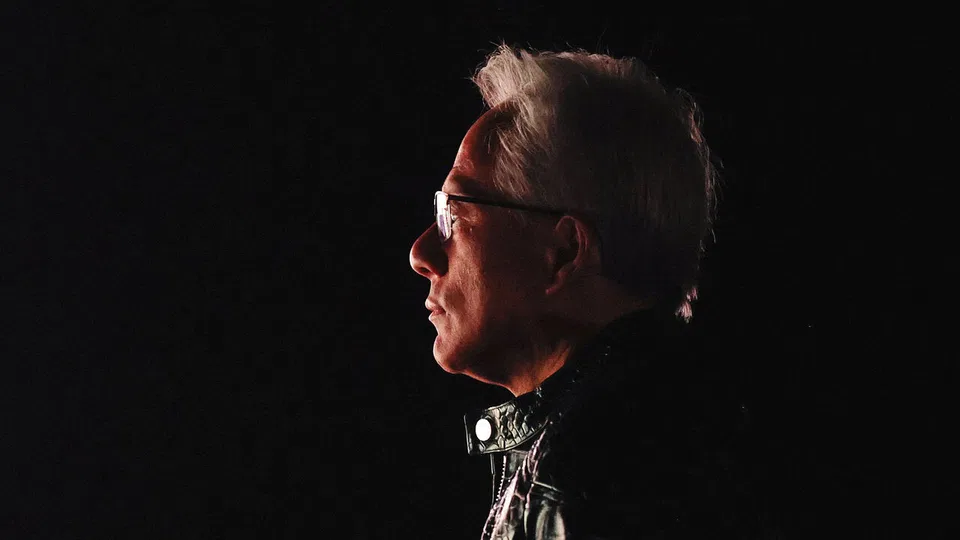
“The fewer our wants, the nearer we resemble the gods.” Is this true? Does God not want for much? As creator and arbiter of this world, the universe, and everything, does God not want? God must want for something. Salvation of humanity. Peace within our world. For the children that continuously bicker and fight over meaningless and worthless things; things better used when distributed and shared, but are killed for. The Ten Commandments directly laid out rules of what God wants, and Jesus laid out the golden rule. “The fewer our wants, the nearer we resemble the gods.” Socrates rejected the pantheon and the stories told about them as lies and children's tales, using them as parables and allegories; of course, the pantheon could not have been as brutal and humanistic as they seemed. He believed the gods to be just and good, living after the creation of humanity and all things above and below. He may have spoken of their belief in the original creator, chaos itself, that seems to have been lost to time, who is the founder of the Greek world: titans, gods, and all, a vast presence spanning everything. Chaos, or his just and wise gods- what do they want? As I know Socrates, as I have read Plato’s description and rendition of him, it seems true that the gods want for little; they are not keen to ask much of their creations. To be fair to him, I understand this as his belief that desire creates dependency, as desire and want itself are a form of slavery: you constantly need more, want more, ask for more. The gods want for nothing; nothing external can bring them peace or happiness. Not having a want places you in this realm of form, as freedom is contentment, not the ability to do all; it is the self-sufficiency to embrace life without needing anything beyond what you have. This sounds right and good in all the ways Socrates believes, but my God is not his gods, and my God wants for much; in the image of the Lord, we take much, however imperfect and shallow it may become. The good life is contemplation and the pursuit of knowledge, but God has shown that life is one of service, no matter how you define your work or career. In this imperfect world, you are meant to struggle, and that struggle is the point. Though the Lord stands behind me, above me, to my left and right, I ask myself again: what does God want? Is want a curse, a gift perverted after acquiring knowledge? To be cast out, face the flooding, and, with the waft of embers as they begin to crawl and yell, harbinger to the tale of the fire next time, what is this condition that plagues me? I cannot say there is an answer in this life or the next, but Jensen Huang reminds me of my struggle.
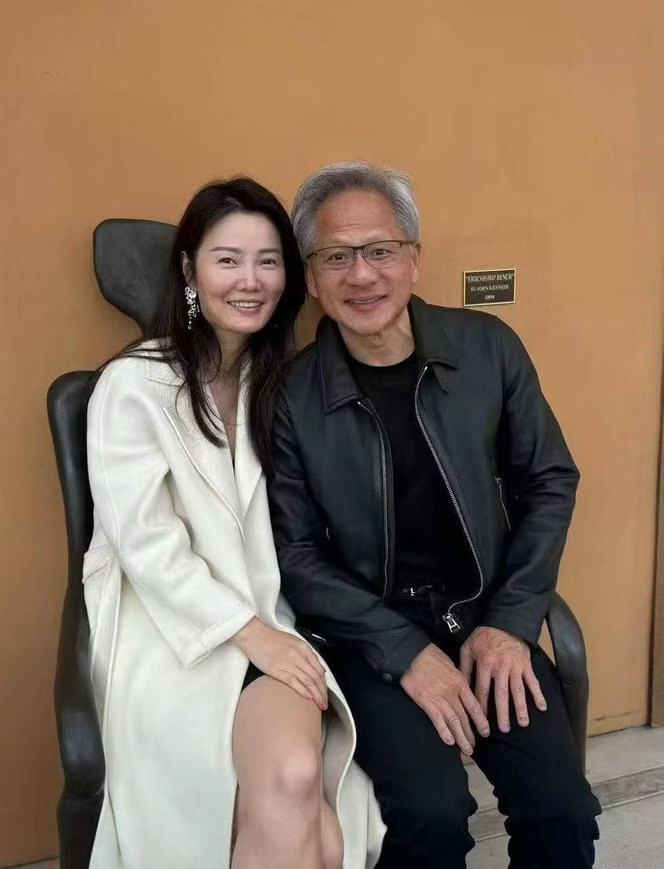
Alice Huang and Jensen Huang
No one cares that Jensen Huang cheated. People cheat all the time: at a bar, in a park, with a fitness coach, an instructor, a coworker, and so many other ways. Cheating is like the weather. Some love it: the rain falling against the window like the tap of a lost child from house to house to find directions home, or the snow as it falls to the ground and covers the streets, used to christen the forsaken concrete it was called to absolve. Weather is loved and also hated: the sun’s heat as it harasses people each day; the fog as it shrouds what you were told you could see. Weather only garners attention in its clearest form, in which it stunts all momentum. Rain and lightning cancel an event; snowstorms cancel flights; hurricanes and tsunamis lay waste to people and towns. That is the weather, and that is the want of cheating only something recognizable or to scale when it becomes an effect, when it is to be seen and heard; that is when it receives the anguish of men and women; disdain and notice are desperately required. A series of small to gargantuan events ranging in importance and significance. Until it becomes the hurricane and monsoon, until it stops everything and affects the lives of more and more people; that is why people care about Jensen Huang, because the woman, Alice Huang, is a Chinese spy, not because he cheated. China is the current top priority of the United States and the country second to us during the AI arms race. A plot that has surely been schemed for many years, many different times, finally worked on the man leading the forefront of the engagement. We see so much complexity inside of it, so many woven paths and different roads that have led us to this moment and the many outcomes that we have yet to see. It reminds me that human will is simple; humanity’s need is simple. From geopolitics to corporate espionage to infidelity, every day it can all be classified as the vicar of want.

Sergey Brin and Amanda Rosenberg, with whom he had an extramarital affair
Context is everything history makes vibrant; the present world cannot see. Huang founded Nvidia in 1999. Five years after him, Larry Page and Sergey Brin would found Google. The difference between these tech billionaires is time. Page and Brin wanted extraordinary control over their startup from inception, in perpetuity, as a public company and now a global power. They asked for dual-class shares, which gave them ten votes per share when Google went public in 2004. Brin and Page have retired, but they still control 53% of the company's voting power. This means they can do whatever they want. They can come back to work without anyone's say; they can fire, hire, change, adapt, affirm, and whatever word you would like; like it is in the palm spread far like the desert, simply as another grain of sand. The tech companies that would soon be born would follow suit, such as Meta, SpaceX, and Snap. In Mark Zuckerberg’s case, he owns 99% of Meta’s super-voting Class B shares. He has 61% of the overall voting power, which, in the heretical and profane sense of the world, makes him god of Meta and one who is unaccountable and all-powerful. When Nvidia went public, it used a one-share, one-vote structure, and Huang has a 3.6% stake in the company and 3.6% of its voting power, while investors such as BlackRock and Vanguard control twice as many votes. I will not venture into my tirade of systems and companies, as I am so devoted to do. Still, the picture is clear: want is found and maintained within an institution of power and dominance, and can only be actualized as such. Huang had institutional and operational dominance as long as he kept making the company billions and they kept growing. When he brought national security concerns and scrutiny to their doors, he needed to take his leave. Sergey Brin cheated on his wife and can still walk through Google’s doors and lead whatever department he sees fit because of time.
Want is our driver; it is the main function of us humans. It is both complementary and contradictory in its appearance and revival, like a perpetual ghost, unfit to wander the supernatural realm. Huang's story is as old as time, one that has claimed many men and will claim more. Time has cost him his job, but want is the basis of his problem. There is little purpose in examining why he did it. It may have been because he could, because he couldn’t when he was younger, or maybe he loved her; it does not matter. Want is that thing we all feel and succumb to like the plague that asks for tithes and demands worship at the effigy. Want is everywhere, and we all want something, but as we see it, all that swims within the mind and cascades like a lightning storm through your eyes requires some form of power, some form of authority. Your wants are taken or given. A promotion, fame, wealth, freedom, rights, and the list that shuffles its feet across the stars is distributed like a wartime bread line. Divided out and given to those deemed worthy, those that deserve to be heralds, that are allowed to be given their want. Is a man or woman no more than that? To be oppressed or to be oppressor, a desire to hold the keys and divvy out the shillings? Then what does that make God whose image we take after? Our want is a debauched copy, so what is God’s? What is the face of want behind the many masks and personas it hides behind?
As the world swirls, the planes fall, and time itself seems to combust, the answer still seems a finger’s length away. I can only say what I want, as I have said time and time again, written word after word, and been obsessed with and devoted to. I know my wants, and will I get them? Some, yes; others I will never see, but want given and want taken seem to be in power and authority, right? How could insignificance take anything? Then I am brought back to the Lord once more, and with the answer whispered or thought sent, it brings me to service. “The fewer our wants, the nearer we resemble the gods.” A beautiful quote, but Socrates missed it back then, and Huang himself is the closest to that metaphysical truth. A want, a real want, a true and honest want, is only given and maintained through passion and service. Save the suffering and guide people toward goodness: a sutra of eight words, and eight words that take a lifetime to follow. It is broken and thrown away in infinite ways, but following it imperfectly and striving toward it must lead you to the other side of everywhere you want to go. For my own sake, for my own soul, it must be; if not, I bridle at what other truth is supposed to be followed. This has to be mine; it must be. This, among other things, is my leading want, my guiding moonlight, as a reflection from my father’s desire. It will never be seen in my time, as that is a child’s belief. Want is all the things Socrates thought it was. It is the act of relinquishing contentment, robbing yourself of peace, and it should be. How could you not want for that in this world, debased and drunk on perceived grandeur? How could you live in contentment and peace as those around you suffer? We should face the struggle in our time and the next and forever until all are allowed to feel that peace; and if even one cannot, you must continue down that road toward want. This is a simple world hiding behind the veil of complexity, and it continually presents reasons to turn away from good. In that still, there is a way out, a way towards that want. A burden shared is a burden halved, third, and quartered. Since we drew images on caves, we banded together in groups and tribes to survive the wilderness. To build huts and structures. Human ingenuity, human intelligence, and all the things we have come to understand were born through that unification, through pursuing want together. That is the direction and understanding is to take here, but my soul still makes me question, still begs and wonders about God from time to time. He knew we would acquire this want; he knew they would eat the apple; he knew we would fall and keep falling, spiraling through cycles we have yet to reach in infinity. Is that the Lord’s plan that we struggle into eternity? Would a just God do such a thing? Would God give us freedom knowing we would make that decision and make freedom itself our prison, a freedom perverted from the true one of needing nothing? My answer to this is that it is a child’s question and nothing more, and that, through our choices, our freedom is our own problem, but that answer still seems incomprehensible. Maybe that is my true want, and I lie to myself about the other, whether I ask for the truth or an alternative I cannot say; I hope that sutra can lead me to it.