Brass Tacks: A Paradox's Soliloquy
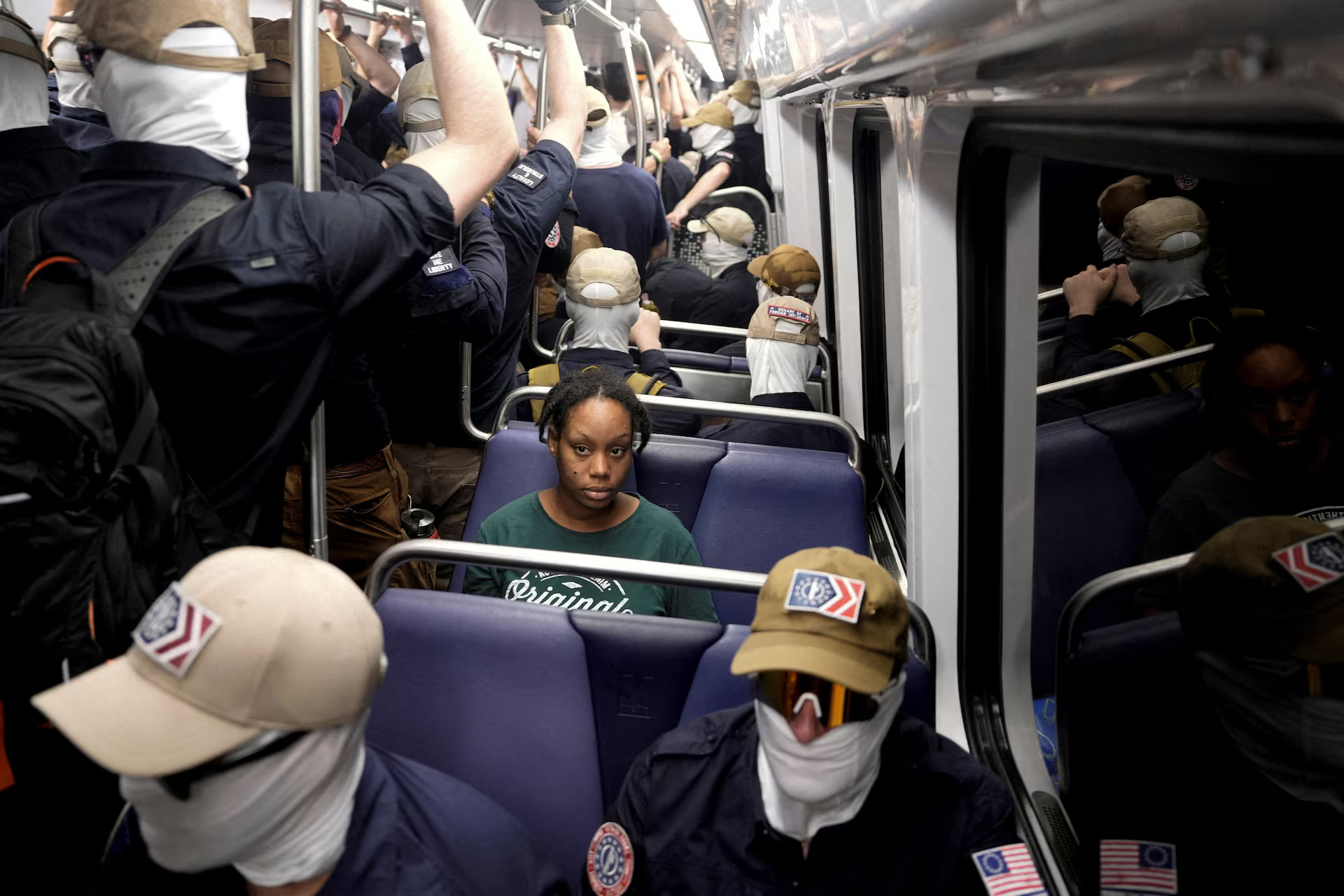
A commuter sits as members of the group Patriot Front ride the metro on the Fourth of July in Washington. REUTERS/Cheney Orr
“So I would take the one box. What makes this a paradox? This isn’t like BioShock at all.”
“Because you’re trying to maximize how much you get.”
“But I don’t need the extra thousand. Really, what’s the point? The best way to maximize is choosing the wooden box and going on your way.”
“Is it, though?”
“Yes! If I choose both, I get $1,000. That’s it. The computer already knew what I chose before I walked in and has been right a billion times before, so why take the chance? Why, why, why do that?”
“You do it because it could be wrong, and you’re trying to maximize how much you get from the situation. That is the point. Free will is what we and Jack are fighting for.”
“Make it a better paradox then. How about that?”
“Okay, okay, fine. Think of it this way: in the wooden box, there is 80% of a deadly disease’s vaccine, and in the glass box, there is 20%. You need the vaccine to save your loved ones, and the 80% isn’t enough. You might think it’s something, and maybe you can do a little bit with it, but that hundred, that’s what you really want. You get it?”
“Then yes, you try for both boxes.”
“I don’t know. Some people may go for one box because they think that’s enough. They can live with 80%. They can live with just being a little better but still dying anyway. Others might need a hundred always, because what else is the point if you aren’t fully healthy? What good is a half step? A partial solution? No, they need to be completely healed, a cure that lets you walk again, that lets you move again. Think about it this way: everything you ever wanted, not for yourself but for your kids, is on the other side of those boxes, and you’re just going to believe it’s right and settle for eighty? I don’t see that.”
This conversation with my brother has always stuck with me. The first thing is that I didn’t understand the theory or what he was saying. The second was how this related to BioShock, and more so how he thought of it as something of a paradox. Even now, as I’ve come to understand it far more in my later years, looking back on this conversation older, I realize there is still only one choice, albeit a different one.
As I sit here now, I think of your paradox, brother, in reality Newcomb’s paradox, and I understand that it wasn’t school that taught me its true significance, but the game you used as an explanation for it and the system we played it on. BioShock on the PlayStation 3. Back when you got it, we knew nothing about it. You got the physical copy, like we always did, because how else is one to build a collection? It is a child’s modern-day Alexandria. On a system that supported us with free online, we had no money to use otherwise, and backwards compatibility to the previous two consoles of games and memories that were vital to entertainment and at times our being. We played it together, well, more like I watched you play it, and there was so much going on. So vibrant, yet dark, foreboding, and full of a sense of hope buried underneath regret. Systems built and fallen with faith and rage. There is so much there, even now. There is more that I can’t see, but what has become clearer on this day is that above it all, it is a game, an experience, about choice.
Throughout the whole experience, we were told by Atlas, a friend in our ear trying to help us escape, “Would you kindly,” and we did so kindly and without question because why wouldn’t we? We wanted to do it ourselves, and he asked. It ultimately made sense. Not much to think about. Until the moment where you understand why he asked, “Would you kindly?” Toward the end of our experience, we are brought before Andrew Ryan, the creator of the underwater city we walk through, Rapture. Atlas says before we walk in, “Would you kindly head to Ryan’s office and kill the son of a bitch?” Of course, because that is, after all, what we came here to do. Before he is bludgeoned to death, Ryan asked us a question of his own, and that question is my explanation for Newcomb’s paradox: What separates a man from a slave? It is not money, not power. It is simply that a man chooses, and a slave obeys.
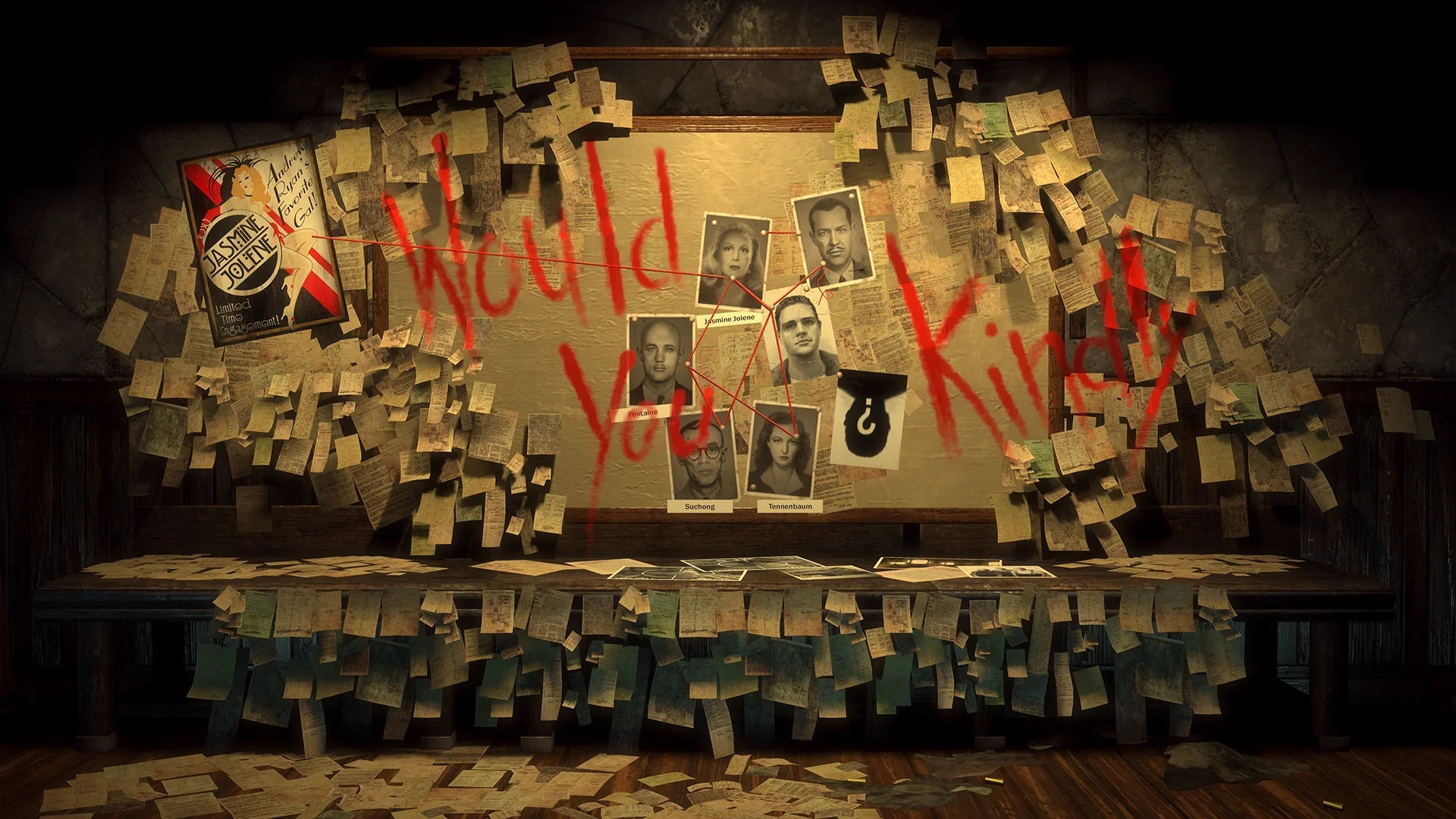
The “Would You Kindly” phrase from BioShock
As men, we walked into Andrew Ryan’s office to kill him because we went through all the hells that Rapture conjured to get there. All the loss Atlas faced because of us coming here. A man killed him. But were we men? What did we really come to Rapture for? Why would we really go through all of this to kill a man we knew nothing about before we stepped into the underwater city? That’s when we realized, when we figured it out, when we understood through hypnotic programming, through subtlety, through a masterclass in showing and exploiting player choice, that we were slaves. “Would you kindly” isn’t a nice phrase. It is a command that forces you to do as you must. A command that tells you to commit to the deed, no matter how heinous, how destructive. It is a command hidden under the guise of three sweet guiding words that hide, and later show, not coercion, but the pressurized tug that we long to call free will.
That is Newcomb’s paradox: a glass box with $1,000 inside of it and a wooden box with $1,000,000. You can only choose between box B, the wooden box, or boxes A and B, the glass box and wooden box together. A predictor, or supercomputer, that has done this a billion times before and has never been wrong, decides what happens to the $1,000,000 based on the person who comes into that room. If you choose the one box, box B, then you will have $1,000,000. If you choose both boxes, A and B, it will take the $1,000,000 out of box B, and you will only have $1,000.
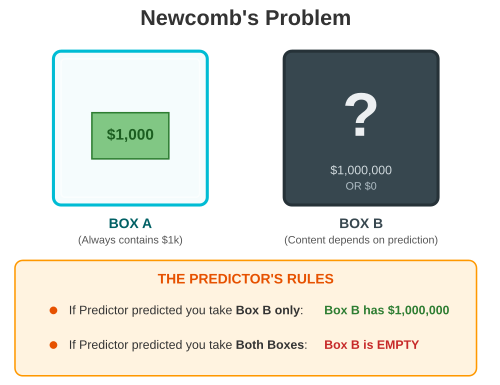
A diagram of Newcomb’s Paradox
But it’s your choice. Please, please come and play! This is what you wanted; the chance that you took is it not? The computer tells you your mistakes are just ways of going about life, simple concepts that explain the folly that is your conclusion to the question. The dominance and the expected utility principle. Dominance is you knowing the predictor already decided; taking both boxes always gets you $1,000 more than taking one, so by that logic, you should always take both. Well, of course, you align more with expected utility; the predictor is right a billion times running, the choice that gets you the most money is trusting it, suppressing your thought, and taking the one box. Rationality, choice, and options, all for the sake of kindly asking you to pick one. The paradox sings to you, swearing it is a blueprint true to form, but truly each note is an equivocation of contempt held by those you trusted, those who said you had a choice. It asks of you to see and make tangible an abstraction such as the future. To see the true face of companies saying they are there to support you with consoles that will hold a vast library of memories you build, dwarfing the gigabytes they hold. Metal Gear taught me that the system calling itself your protector is often the one directing your destruction; that your online self, your soldier self, your consuming self, was always a product someone else designed. God of War taught me that the gods who gave you everything are the ones who owned you, and that recognizing the chain around your wrist is always harder than breaking it. Would a company that provided me such things maintain their truths and stances, or, like all companies, is money more important than any game collection or backwards compatibility? Brother, I see it: what you were doing, what we did. That under all of the numbers, the speeches, the pleading, and the explanations, that is what makes this choice so important. That is what separates a man from a slave.
As much as I could explain the paradox, it is no more than that simple phrase. It makes you so small and makes your decision so important, so paramount to the very being of you. In that being, it directly reflects the person that you are, like most choices of this kind do. Rather than anything foundational to you as a man or woman, what tells us most about one another is how we move and see life in the smallest and most minute concepts that are made large with magnification. I see now, in old age, brother, that it becomes a paradox because you are trying to maintain your freedom as determinism looms over you within a deterministic framework. You are trying to make the rational choice, the right decision, to save your kids, take home $1,000,000, buy the right console for now and the future, or beat a man to death that you barely know. You must make the right decision, the rational one, but that is the very point. You are agonizing and sweating over a choice, agonizing over something that was determined before you stepped into that room. There is no choice to be made in that sullen cove of two boxes, but it asks that very thing of you. And in that, brother, now I see the paradox, and I see the answer you saw back then. A man chooses; a slave obeys.
On this interesting July 5th, I sit here writing and thinking about this, but I am brought to the most interesting event that has taken place on any July 5th thus far. On July 5, 1852, Frederick Douglass gave his keynote address, “What to the Slave Is the Fourth of July?” The speech is beautiful. I wouldn’t do it much justice relaying it to you or recounting the whole thing, but what has always resonated with me is the section:
“At a time like this, scorching irony, not convincing argument, is needed. O! had I the ability, and could I reach the nation’s ear, I would, today, pour out a fiery stream of biting ridicule, blasting reproach, withering sarcasm, and stern rebuke. For it is not light that is needed, but fire; it is not the gentle shower, but thunder. We need the storm, the whirlwind, and the earthquake. The feeling of the nation must be quickened; the conscience of the nation must be roused; the propriety of the nation must be startled; the hypocrisy of the nation must be exposed; and its crimes against God and man must be proclaimed and denounced. What, to the American slave, is your Fourth of July? I answer: a day that reveals to him, more than all other days in the year, the gross injustice and cruelty to which he is the constant victim.”
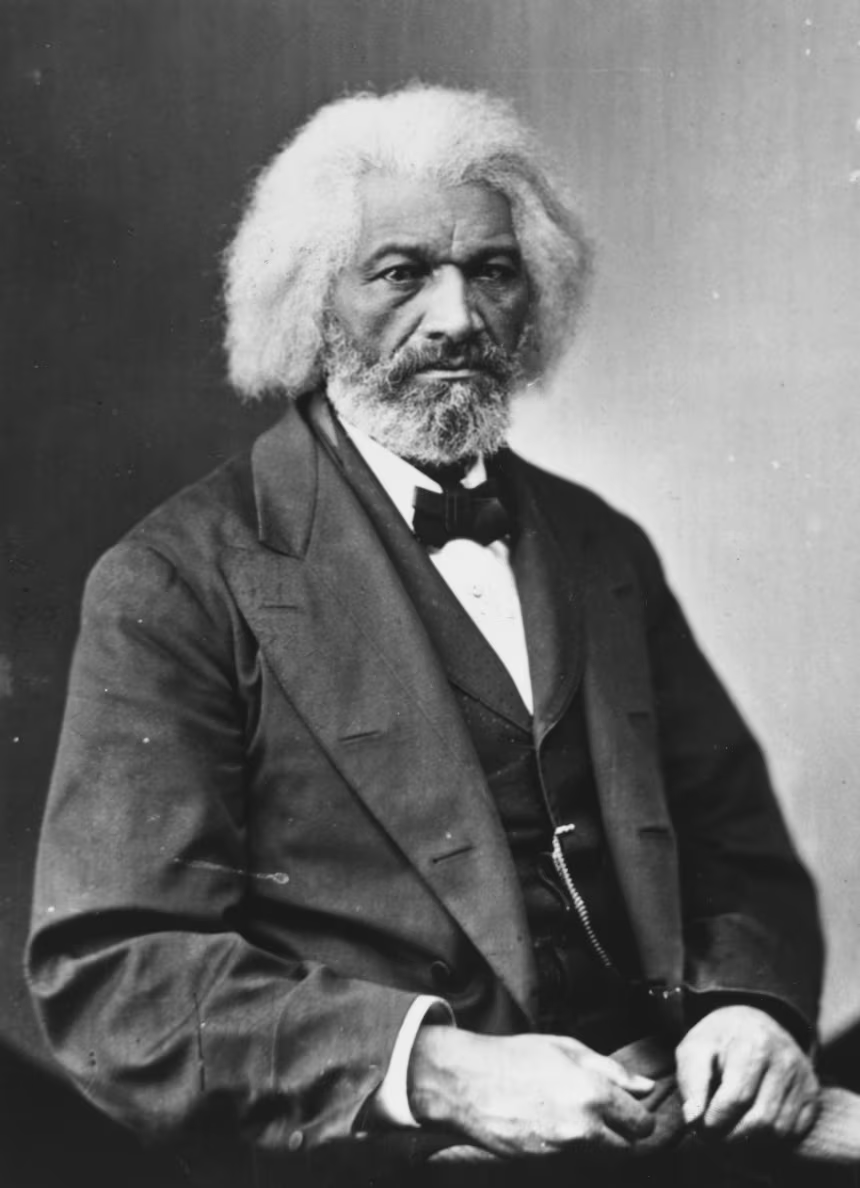
American journalist, author, and abolitionist Frederick Douglass
Douglass, as he presents this to us, what sticks with me most is what we need: the fire, thunder, storm, whirlwind, and earthquake. That is what we need. But in that speech, there is a light, and there is a shower opposed to them. It brings me to that same paradox again. As if it were my waking dream, I see it before me, renewed and ever-present like the curse of a reaching hand.
It’s that there is a choice. There is what one must choose, what you must do, and no matter the oration, the knowledge, the bravado, or the argument, it is never up to you to decide for another what they must do. It is clear as day to you, the same to another, and foggy to the man beside him. In the face of the nation that Douglass felt, and the sad understanding that his speech, in more ways than one, is applicable today, it shows that many choose the shower over the thunder. But how? How could one choose such a thing? A lull to sleep over a consistent bashing to stay awake, to want for love of everyone and a better world for all. What would make you choose light over fire? The answer I can draw from it now is the idea that as much as you thought that was the right choice to make, and a choice that you chose, you never saw the man behind you or heard the whisper in your ear moving you down that path.
This week, with so much happening, the thing that stands out the most with this subject is PlayStation, Sony’s video game division, saying that it will stop the production of physical copies of games in two years. Now, you may think that makes sense, right? This is a digital world, a digital time, so why would we still produce physical media? Why need it? Such an old and antiquated idea. So much so that nowadays, 90-95% of people buy their games digitally. Though I hope you realize that is far from the point.
Physical media of all forms is about ownership, the idea that you pay for a thing and that thing is yours now. Not a very complicated idea, but it becomes complicated when it comes to digital. As you take away the physical, it becomes pseudo-ownership. If they lose the licensing agreements or rights, it is gone and taken away. This happened with over 500 of Sony’s movies, and they were taken away from their customers in an instant because that’s the cost of business and you don’t own it. It gets rid of the secondhand marketplace. Since there are no physical copies, you can’t sell them to others or have a thriving ecosystem of trade. In-store competition is gone, as there is no longer a discount at Best Buy compared to the discount at GameStop because you can only buy it from PlayStation. It takes away any idea of what it means to own something.
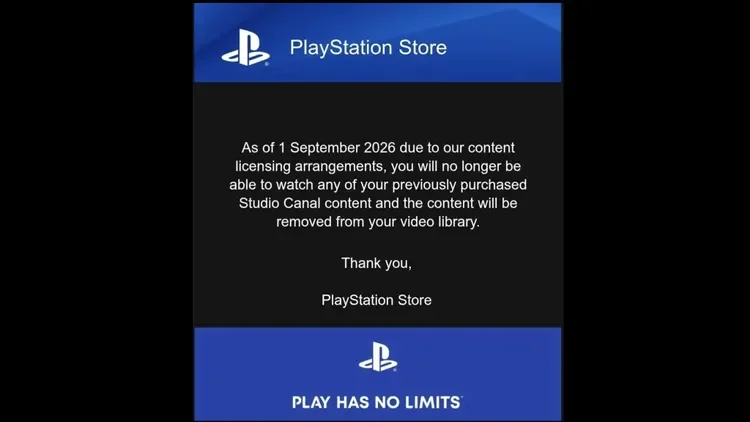
PlayStation informing users they are losing movies in their library. Please note “Play Has No Limits”
The most sadistic thing about it is that it seems like your choice, your decision, does it not? We are doing it to make it easier for you, more convenient for you. It all makes sense. It just works. But you were corralled here like cattle at the slaughterhouse, and your convenience was planned and fed to you in your trough. It’s done in a thousand cuts, not one fell swoop. Microsoft bound games to your profile via disk, and it was controversial and stomped out, making them walk back their decision. Then, thirteen years later, the game is bound to your profile because you downloaded it digitally. In those thirteen years, you are acclimated to understand, “Well, that’s just how it is, I guess.” It starts by making fewer physical copies in stores, changing store placement of games, making them hard to find, selling the idea to you as if it will allow them to make better products by saving more money. None of it is true. It just makes you think you have free will in a choice determined before you woke up today.
It is the actualization of the system of capitalism, of want made manifest as it walks the Earth. There is no such thing as enough, so everything must be taken. Sony had free multiplayer, and now it is a three-tiered subscription. They had backwards compatibility with all previous generations; now it is just one and soon to be none. As something happens in one place, it is only a matter of time before it happens in all places. That is what it means to lose. That is what it means to be lulled to sleep. An ever-growing hunger that will consume all that you love because it ate something next to you. As Pastor Martin Niemöller said, “First they came for the Communists, and I did not speak out because I was not a Communist… Then they came for the Jews, and I did not speak out because I was not a Jew. Then they came for me, and there was no one left to speak out for me.” As the hunters clear the forest and you hide in your hole, it is only a matter of time before the bipedal plague comes for you.
One of the most important games from my youth was a game called Sly 2. A game about a raccoon, a turtle, and a hippo who are thieves. Sounds silly, but the effect it had on me still has on me, makes me who I am today. The worth of a friend, what it means to be part of a family, a long line of people who have stood for something and did things they believed in. How evil and systems are connected. A man in France prints counterfeit money, the same as a man in India produces illegal drugs and a man in Canada transports them throughout the world. Evil is too harsh, too simple, a word such men scoff at. They are producers, transporters, and craftsmen, not drug dealers, peddlers, and charlatans. But within their systems and with wealth, such monikers are not fitting. Those are the machinations of evil, a seen presence distilled through the ages long after its progenitor is gone.
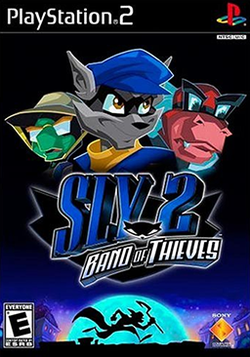
Cover art for Sly 2: Band of Thieves
Though what had always stuck with me most in Sly 2 is when Sly, Murray, or Bentley, the raccoon, hippo, and turtle, respectively, were taken out of the action, captured or lost, and the others would step up because they had to. Because a friend was in need. And though you may not be the brains of the operation, you must overcome that fear and try because your brother needs you. You may not be the brawn, but you must overcome that fear and try because your brother needs you. You may not be nimble, charismatic, strong, brave, or feel capable in the slightest, but you must overcome these fears because your brothers need you. I’ve carried these values and themes from this game into who I am today.
Sly 2 was given to me by my friend, who had already finished it and wanted me to try it. A simple trade between friends that means more to me now as I’ve grown older and has shaped how I take my steps. BioShock was bought by you, brother, and was passed down to me. A collection full of games given and traded and pre-owned. A wealth of knowledge, physical and owned, dispensed and given for more, all simply because you want someone next to you to experience it too. To be changed by it too. A thing as simple as that will be lost soon enough. More than that, if those games aren’t remastered or remade or their companies go through licensing or rights disputes, they may be lost. Your ability to relive an old memory and be confronted with a new idea from an old piece of media may be lost. It wouldn’t be the first time for such a thing to happen with the preservation of media, and it seems as though it may not be the last. Your freedom and freedom of choice will soon be taken. But you may say it is the changing of the times, and people will move on because that is what people do. But I say, what is the cost of moving on? After so long, you look back and see all that you left behind. Was it really worth moving from?
As I think about all these things, I am left wondering what choice there is to make. It seems simple to me whether I should choose the shower or the thunder, but to another, it is also equally simple to them, and that is what scares me. That they see the choice so clearly, that what box to choose makes so much sense it is no longer a paradox, just a simple question, a yes or no.
I am inclined to convince them, to make them see how wrong they are, but in that struggle, in my attempt, I am reminded as I say each word that they believe they chose this because they believe they have the freedom to. That they decided which box to choose. And they think their box is correct. It is, after all, their choice, and things move on as they should, and there is a tomorrow as there once was. They are clearly a man and far from a slave. They are correct because no matter how it may seem, you do still always have to choose.
So why labor the point? Why think about such things? Take your digital copies. Use what they give you because everyone else does it anyway. Why be different? What is the point in fighting when there is such a great chance of losing, of losing out on the million, that it only makes sense to take what they give you? They know anyway, right? So agree with them.
Though when I think of Frederick Douglass and his speech, I wonder where I would be if he thought those things. Not better, I am certain of that. I wonder where anyone would be if you took that road of sweet serenity amid the growing maw that vows to consume only because you allowed it, even though it was there long before you. I know without trying, without the attempt, if we were to move on as people do, we would move on to much harsher waters and deeper ravines.
The choice may have been preordained. You may hear the answer was already chosen. But there’s a chance, an insignificant, infinitesimal chance, that this time it thought wrong, and you can take $1,001,000. Aside from the money, the systemic issues and natures of man and being as it surmounts and squishes heads under boots, through all of it, I want my child’s child, the son of my son’s son’s son, to receive a gift from a friend who thinks he would like it. To have games passed down to him from a brother that, as the years go on, he continues to understand. As with most things, the smallest and most minute concepts make large, with magnification, what we want and who we are.