Doing the Best I Can

Two people on opposite sides of the road notice each other. One holds up a flyer and tilts his head down and to the right with a smile, looking towards the other, while the other shakes their head from side to side and throws their fingers in front of themselves a few times. Another walks down the stairs towards a bathroom, and their nose is assaulted by the wanton smell seeping from the door, cascading like a typhoon. These interactions and images show the body’s beauty and creativity, conveying intent and belief without language. Expectation, refusal, disappointment, horror, sickness, revelation- all said without saying, all seen, felt, heard, and smelled through simple interaction and being in congruence with the world. They are heuristics and motions built over time and through constant human interaction, in ways that our collective intelligence reiterates through experience. We know what a head being tilted down with a smile means, same as the smell that is an affront to our nose, and same as the hand being used in a shooing motion. It has all been built through constant invention and reconstruction over time, driven by ingenuity and human need. In a way, these conversations, spoken through the other dimension, are our very own form of a colonial agreement and involvement. Through interactions, better and worse, we come to understand what we mean without using language to convey information. One of our many talents and shortcomings is that things build up over time and overtake one another, forming new meanings and understandings. It all happens through experience, and in many ways, taking what you can and making the best of it. As situations pile on and continue to grow with an unwavering amount of information, recognition, responses, and so on, you and the rest of humanity must create these forms of communication, these ideas and ways of understanding to move forward and push past the many challenges that envelop the world like the sitting murder on pole lines waiting for the coming event to swarm. That is what we have always done in a way, for better or worse; we do the best we can.
Mycelium and slime mold are the same in that way. Slime mold has no brain. Mycelium has no headquarters, no real home to speak of. But from our perspective, each choice and decision they make seems to convey some intelligence, like a sculptor chipping away at marble. What actually happens is that each node, Hypha, and cell responds to its immediate local condition. In that way, it’s like dropping a blind man in a forest with nothing but their walking stick. It is intelligence, but it is a primal urge with all synapses yelling “survive”. Responding to chemical gradients, available resources, moisture, light, all responding and deciding the best action from what you sense. Slime mold scours the land like a starving dog with its nose to the ground, searching for food in multiple directions, reinforcing routes that work, abandoning those that don’t, and producing mucus trails that resemble a network. Mycelial networks tear like thunder of a blitzkrieg, expand where conditions support growth, and retreat when they worsen.
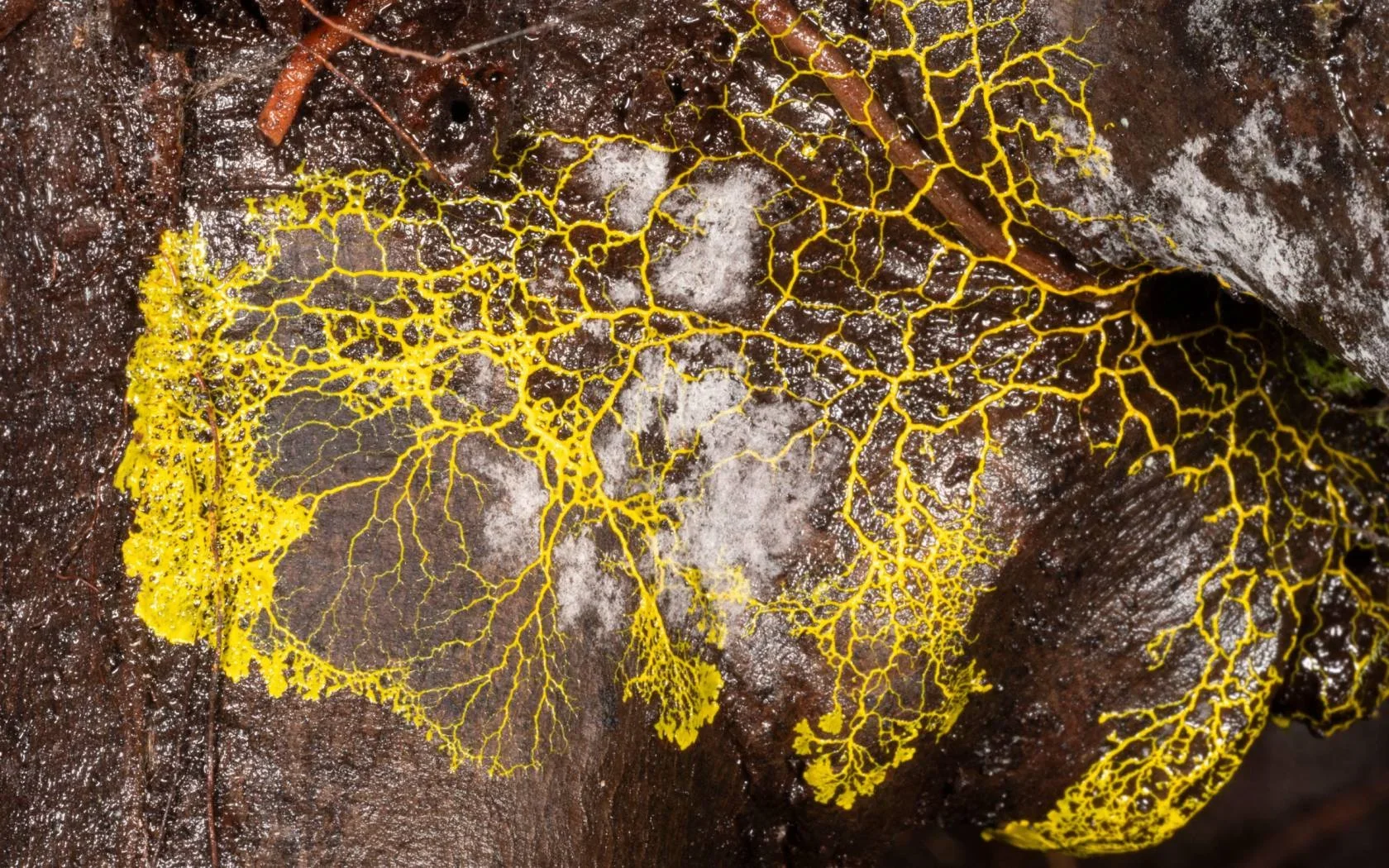
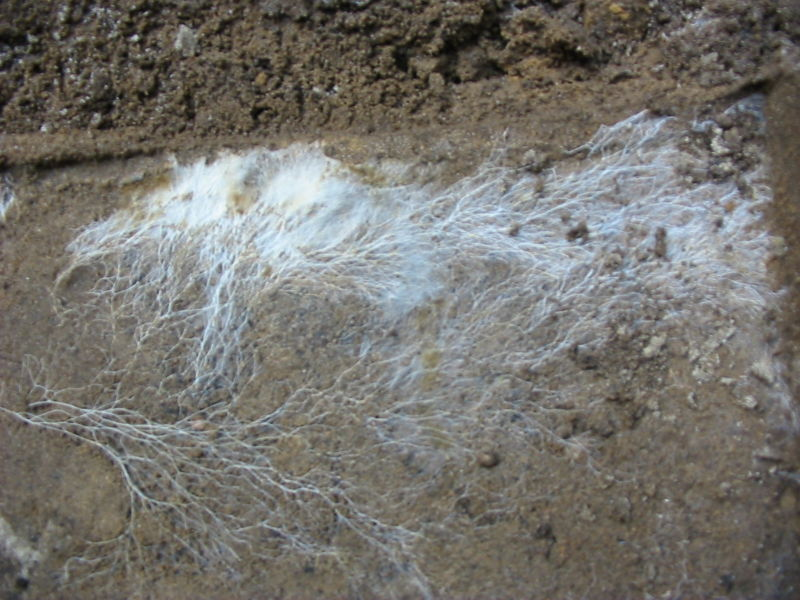
The more I look at it, the system and its network, the more amazed I become. Are we sure this organism, or better yet, an organism, does not have some plan, some idea how to survive? Is it really just responding to the situation as it comes? Recognition, reaction, and action in infinite regress alongside the turtles? Surely there is intent here. When the slime mold starves out the competition, it must do so to ensure its survival within the ecosystem, grow in size, and make certain it always has substance, taking it away from the competitor to provide more for itself. When mycelium becomes parasitic, it must be because it chooses to do so. They see a host, a body that they can take from, steal from, and make their slave their workhorse; on its back they can build, thrive, and grow, and as it fights for survival, they only become stronger. Stealing more nutrients and creating a steady feeding source, all in the means of survival but a survival that offers them more without their need of finding it themselves. A malicious and shrewd act, abusing the organisms around you. But rather than abhorrent cruelty in actuality, it is a stressed, nutrient-deprived node in a network responding to its conditions. There is no conspiracy; it is doing the best it can with what it has. Even then, slime mold has no agency in the sense that we imagine; it is physics at work. Mycelium: the conditions of the node affect the whole web. A stressed, depleted part of the network outputs differently. Not as failure on its part but from systemic deprivation. In this purely scientific and naturalistic way, it seems to make more sense of its actions. Still, as a human being, as one who has experienced this world, it raises the question: what conditions are producing this behavior, this stress, this deprivation, rather than judging the node for its actions. And as natural as amoral as these actions are, as the world pulses these days singing its own anger and folding on top of itself, being a caricature from a story, the scientists and biologists have to be wrong; these must be beings doing the best that they can.
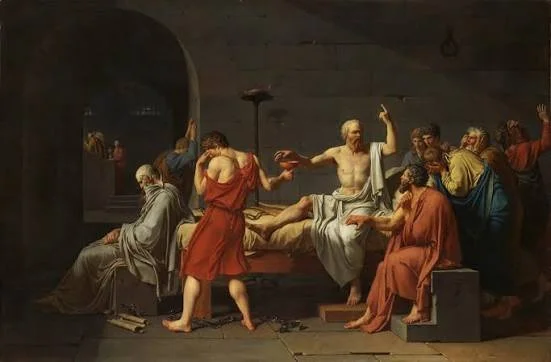
“No one who has knowledge or thought of other actions as better than those he is doing, and as possible, will do as he proposes if he is free to do the better ones,” Words from Socrates from Plato’s Protagoras. Words that still somehow seem to haunt me and are questioned every day. In simple terms, Socrates is saying that human beings are always doing the best they can. That we make decisions believing them to be good to us even if the rest of the world does not see them as such. That even the most horrible men in history who have committed the worst deeds imaginable did them because they thought some good would come from it. That they were doing the best they could with what they had. Socrates believed this: that when we commit an action, we make the most astute determination that we can at that moment that it will cause us some good. If that turns out to be the opposite and is worse for us, then we did not really want to do it. A strange thought at first, but the more you sit with it, you come to understand what he meant. A teacher described it to me this way, through a reading he assigned: it is like being trapped in a maze; you face two directions, and you go down one because it seems like the best thing to do at the time. You want to get out but hit a dead end, knowing you went the wrong way and thinking you did not want to go that way at all. It is making a choice not knowing the outcome. Similar to the maze of life, that piece went on to say that we all make the best decisions for ourselves, not knowing the outcome in advance. Your job, spouse, simple things like how you get up in the morning, and the step you take seem like the best decisions until they are not. Then it becomes the choice you did not want to make because of the negative outcome it has given you. In this frame of thought, all of those choices a bully, enemy, or anyone unkind may have made towards you were them doing what they thought was best at the time with the information they had. Research even shows many external life factors cause bullying, and unkindness in many different forms is birthed through ignorance and how we have experienced and lived our lives so far. Like you, I have done unkind things to people that seemed right at the time or were a reaction to something that had happened. As the film Colony says, as I remember the real quote poorly, imperfect communication is the cause of great suffering.
I still doubt this idea. If you think something is wrong, you would not do it, no? Using an example, if I do not start writing this story on Thursday, I know I will continue to procrastinate, get mad at myself, and write it into the night on Friday and Sunday morning. I know this, and I have felt this before, but yet still I do it, and why is that? That on Thursday I don’t end up writing and need to write Friday night and Saturday morning to make up for it. I know how I feel; I know the state that it puts me in, so why do it? Because, like you, I am doing the best I can with what I have. Tired from work, wanting to watch a movie or TV show, falling asleep on the couch at those moments before the bad decision is understood. On Friday, there were moments of good decisions that Thursday night. As much as you plan and maximize your life, things come up, and you adapt, recede, or move towards what you believe is right to do in that moment. “Everyone has a plan until they get punched in the mouth,” and life punches you in the mouth multiple times a day.
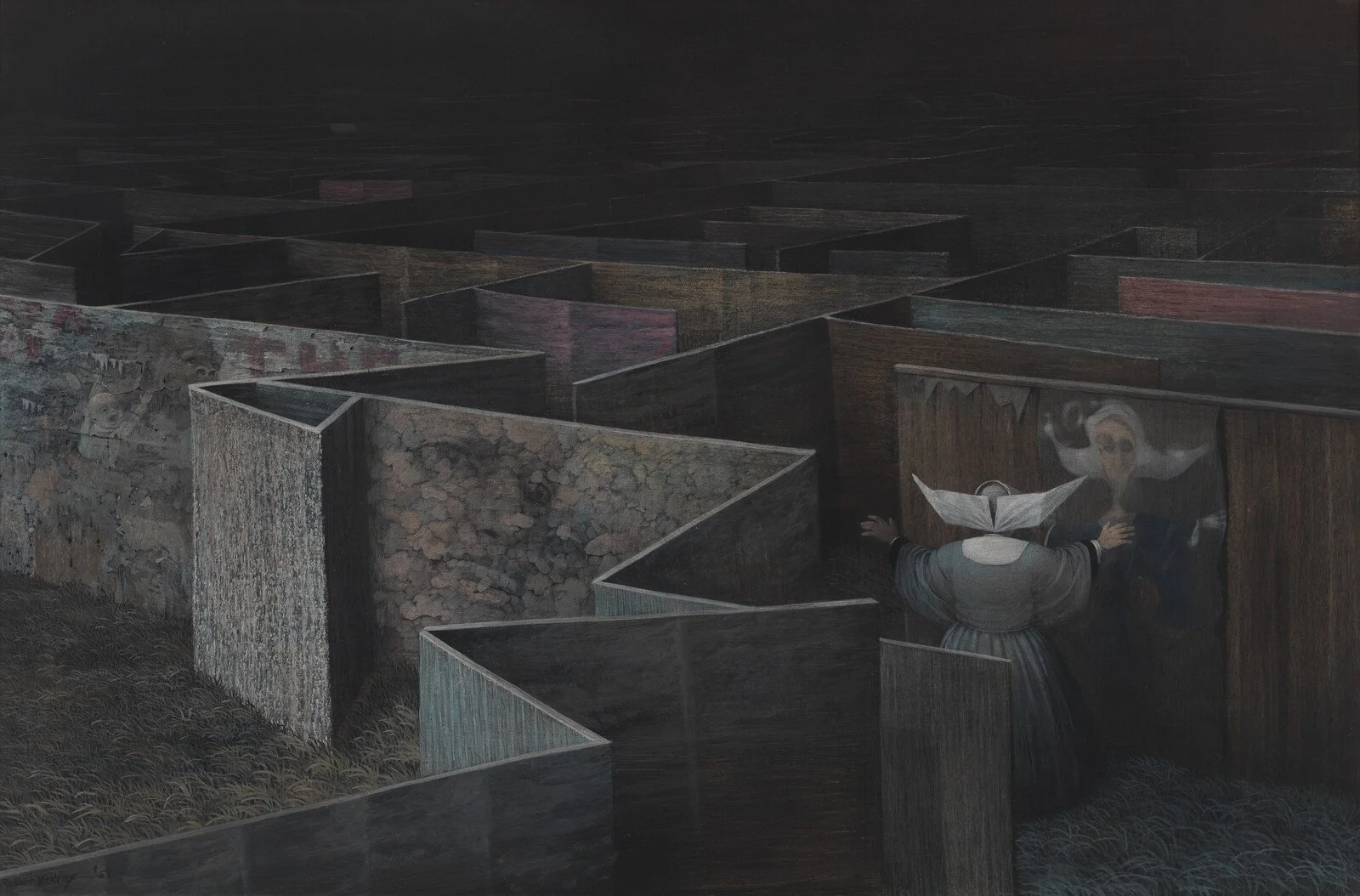
What really sets this over the edge is the idea that we are humans; we have morals, and we know right from wrong. Even children know what is bad and what is good. What smells good and bad. Same as the stink from the bathroom, same as the overcooked meal, we have developed over centuries to acquire that knowledge without speaking. Family trees that, when made physical, span networks over the forest we have grown and survived from experience and conflict. We understand what injustice looks like, what genocide looks like. What slavery and hatred and the anger and rage of those malefactors that devour evil for enjoyment’s sake we are moral beings; we know what this looks like. As much grace as you give people with this, do they really deserve it? Did you? When you made that bad decision, when you hurt that person’s feelings, is that any excuse for the outcome? Is any excuse ever worthy of your choice in life? We know we have a brain, but we forget its presence when we commit wrongs; we are overwhelmed by the situation and stimuli, both present and past. The systemic, political, and socioeconomic pressures I have expanded on till blue and the pressures humanity places on people of their same ilk- is there anything in this world that can justify actions that you take? Even as much of life is determined, as much say as you think you have, you have very little; but the little that you do have, that small microsample of free will, it makes up for the infinity that presses against you with the will of a white dwarf. Even in that every day that you live, you can choose to fight back and choose better. You always can, even when you choose not to. That is what this life means. That being good is not a state of being or a natural phenomenon; it is a choice. We have no headquarters to speak of, no real place to ground you, just figures and people from tomorrow and today to move towards or away from with every decision. Humanity has made choices that, over the many lifetimes lived, have become both good and bad, and have shifted and faltered, same as a head nod, same as a scowl and a smile; we communicate and live in community with one another beyond our words, through interaction. Men of different languages can speak just fine, and women of different upbringings can understand one another perfectly well. You chose your good or evil because you chose it; do not cower in the face of judgment because of the world. If no one will, I will force you to stand tall like the marble made manifest through countless hours of tireless work. An organism stressed and nutrient-deficient, forced to survive. An organism crawling like a blind man in a forest, each learning more each day, finding new paths, new routes. Building from past mistakes and nodes in front of you, learning from your own. That is what you are, after all: crafted by men and women you forget after a time, made to resemble their image, but even then you have choice of where you are placed and how you stand.
This frame of thought is part childish, part beautiful. I can’t say it is terrible or great; it is one of those things that is. We are all doing the best we can is a beautiful idea that, after these years on Earth, I cannot fully agree with. Even in my worst, I reluctantly must admit it was my choice, just as it is all of us. There is beauty in the fact that now my choice is mine when few of them are and that I choose love and goodness over the multitudes of hate. In this childish, some would even say ignorant framework, I see the use. If everyone is doing the best they can at all times, it makes me better; it gives people more grace for making the right choice instead of the right one. It forces me to understand them and where they come from, rather than engaging in debate and retaliation out of my own hate and anger. It makes me more curious about them, the world, and the many things we have built to harm and to grow one another. It helps me realize that we are all human and that imperfect communication causes the greatest suffering. If it were false, we would be lesser than human, bestial, cantankerous beings alien to each other, all wanting for the self living in hate and destruction. As childlike as it may seem and as wrong as I continue to feel it is, it is a thought and belief that I wrestle with because it reminds me of the good in everyone that we are all human for better and worse; that is an important thing.