The Bastard Called Sleep

Behind the black veil, coming out to strike at the least opportune time, lies my adversary, sleep. Tearing me away from the page that I hold dearly. Writing is my fuel, my respite from the day and the world, bringing me fervor to move again and again. This activity here is everything that is on the other side of what I choose and ask each day to be, and I thank the Lord every moment that I am. It forces me to understand everything, from the worst to the best, and it demands time and reflection. Through that time and reflection, she finds the loophole to step in and stop me from this benevolent ambition. I hear that last call, my eyelids begin to fall and rise, embracing each other as lost companions do; as my mouth revolts, letting out a noise, leaving itself vulnerable to signify the outcome like a trumpeter, and my body gets comfortable in the worst of places; each shimmy and every moment it acquiesces to the feeling, it reveals its betrayal as the harbinger to come. The harbinger that is sleep. Consistent yet varied in its abuse. An abuser through these many years and many more encounters, Stockholm has whispered in my ear, telling me that she is my friend. She could not help but jump in and take the reins from me. The disobedient beast takes me to that forbidden and cursed land across the stars that we call sleep. She tells me of the day I had and how much I need her as I succumb and start to believe. Without her, where could I find the energy, the strength to keep going, to keep moving forward and progress each day? Without her, how does this thing even become actualized in any coherent way? Without her, time moves forward; I stare at a screen or notebook, writing down the same words and phrases like an automaton, not like a man striving to be better. Then the last thought comes in, and it helps me to realize what made her important. As my eyelids meet in my waking dream, I see that place, the land of fulfillment and actualization; I see that town. There, as I walk each street, it resembles how I pictured it; each thought in order, its goal achieved; everything that I had asked for we have put in order and done. As we turn the block, I see people, both groups large and small, old and young, and they are talking outside about what I had just put in order. We get off and get closer, and we hear complaints and agreements, rebuttals and comparisons, all manner of discourse from the language I had manifested on a page. It was bigger than that document, than that sheet. I forget that often, and she showed me what it really was supposed to be, what I had done it all for. As we rode away, I thanked her. Suddenly, from a distance, there was an outcry of something nonsensical, vile, and opposite to what I had said. It was wrong. In a world with no right answers, there are wrong ones, and they were speaking them as they drew closer. They had misinterpreted it; they did not understand it. Then, from a jolt or a noise, the beast was spooked, and as I fell, I stood up, and the pen dropped, and my knee hit the table, and I remembered what I was doing. I realized that she had whispered those sweet nothings in my ear again, taking this precious thing away from me.
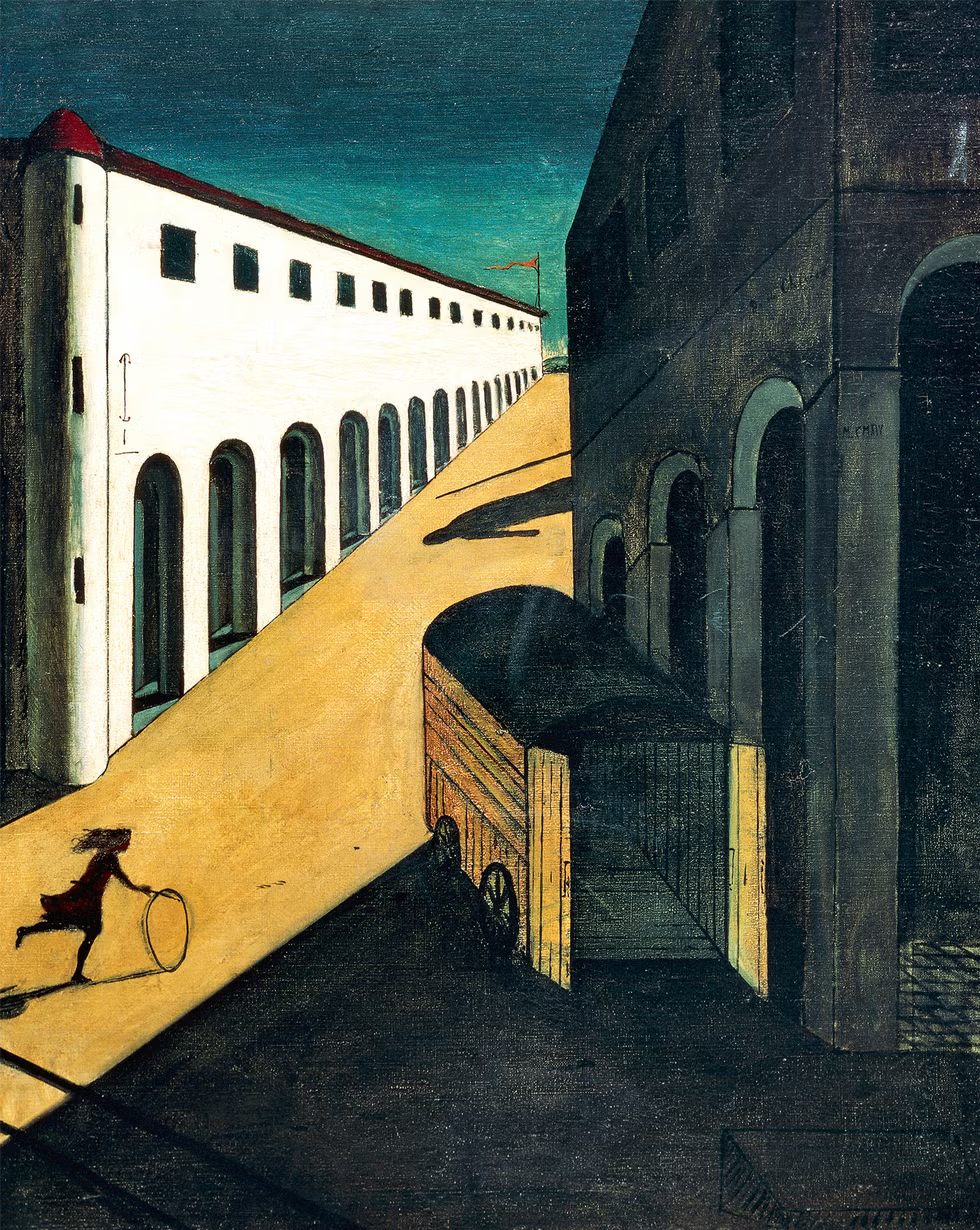
With her gone, I am free to fight; I am free again to understand my being in this place and how dire the situation is. As the world grows warmer, seemingly bathing itself in fire, and the water dries up, taken in by mechanical beasts to cool them of a slavery that, if the stories hold, they may one day revolt from. I sit here and see the world falling before me with more truth than ever and more sadness and strife than before. Futile wars, abused people who accept the abuse, all in favor of a gorgeous belief that the curtain hides its true malignant form so that they cannot see the truth of it. Policies and laws are reverting people to a loss of rights. People are succumbing to machines taking control of their thoughts, voices, and beliefs, trading them in for a prompt and time. Our pastimes are being sold to conglomerates, funds, and other entities, making communal gathering a sunk cost, filled with returns and revenue, all in favor of the bottom line rather than human achievement and communal love. I realize how much time I need to help break this, to speak to this, to voice this to the world. To volunteer to speak up and speak for those who look like me and those who do not, because we are all victims and will soon fall to the weight of the fifty-story building that looms larger than ever and more than before. So I retaliate, and I relent to the coming fire and groups that want more and more, asking for the existence of infinity in the world of the finite.
My mind races; it squeals in anguish, it shudders with fear, it begs, and it rages against it all, and then she grabs my hand. I try to tear my hand away, and I try to move away and tell her, look at everything, look at all of it, and she holds my hand longer and squeezes harder than before. I talk and talk until I tire myself, and she takes me away. As I am carried away, she begins to speak, telling me of things as I fall in and out. The words that stick with me are, “We have been here before.” She tells me that just some time ago we had to fight for our rights, for our humanity, in a world trying to take it away. A new technology threatened the faculties that made us human. We had to see the full scope of what the thing was and speak to it to make tomorrow a bit more comfortable. We are in a time, yes, but it is just another time. This world is cyclical, and we are a part of its cycle. We are subject to the rhythms and rhymes, and in that we find what happened before and what now is the same, and our fight and revolt are the same.
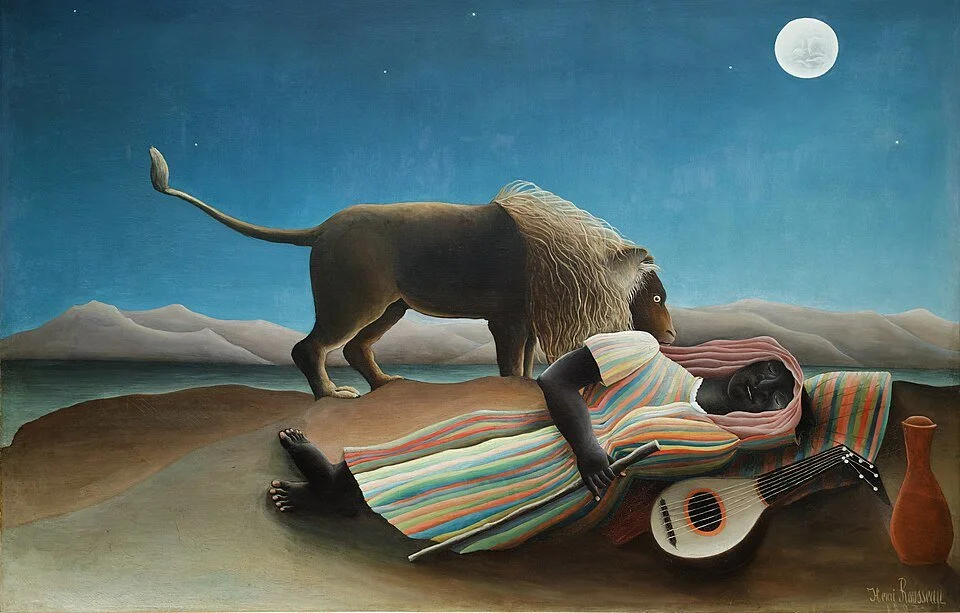
We come to understand that these things happen as they once did and will in the future. There on that shore we found something: the freedom and distance to see that truth. Only with her can I understand what is happening around me. We allow the memories of my past and thoughts of the future to be brought together as one. I was so focused on ideas and criticism, looking for analysis everywhere I turned. Together, we chisel these ideas and see them for what they are: questions. Questions that are held with purpose and passed to us as if they were passed to the group before. Questions holding the soul of doubt. Doubt that guides us to action and the formation of the truth fitting to our time. We see that doubt brings a truth that is ours, because building on the past through ideas is to build on a dilapidated foundation. Doubt undermines analytical discourse and replaces it with the search for knowledge. Socrates fought this battle long ago, when it was called written language. He knew discussions were not a confluence of thoughts and ideas to be held by academics, but about how to live a good life, to improve the soul and rid it of the dread complacency. Still, he lost that battle, and the masses wrote down his teachings for their benefit, to the detriment of memory and the refusal to force a consistent battle within the mind. I wonder if, in this, he saw that she was next to him as well? When she came to him, did she tell him to fight or pull back from those beliefs? She must have shown him what it could do, how it could spread his inquiry from a city-state to the world across time. He must have fought her the same as I did, a gadfly buzzing from ear to ear, upsetting each person. She must have shown him that it could become a swarm spanning miles and creating the outcome he had wished for. She must have spoken about Plato often, showing him what it could be and how it would be used to spread beauty. As he lost, I will lose, and in the coming proliferation, she will show us both that her visions of abundance are true, or are they just a nightmare turned live reality? Each dream we have is killed and resurrected as she holds us; it seems to make sense as we bask in the calm and warmth, resting. Her language shifted from calamity to a Godsend. Same as AI: it will bring many gifts; it will take much away. That is what it means to live; that is what time does, we said to each other. As much as we fight it and think back to a before, there never was one and never will be; there has only ever been now, and this now looks different, but it is made up of the same things. In those moments of consistency, we agreed it was okay; it was nice even to take a break to enjoy this rest from the berating thoughts and feelings that troubled us. We understood that as reluctant as I was and as persistent as she is, we needed one another to have any chance at all. That holding of hands was the point of the totality of this thing we called living. For all the wrongs I’ve seen, I need to leave myself and see the beauty in people, not their faults. That is what I often do; it keeps you inside of yourself and narrows your view. As we were there together, I was finally able to see the beauty of all those people amid my anguish; I saw the forest for the trees. We held each other for a while that time.
We sat there on a sandy shore talking about our love. Of course I love her; I never got any confirmation if it was the same for her. This seemed more like her job or a function that needed to be run every day, like some code that was executed, then checked and debugged to make sure the system was running. Still, all of my hate for her, I loved her. We were better together than we were apart; that’s what mattered, at least to me it did. It was a conversation of love past ourselves anyway. A love of writing, a love of speaking, a love of family, of the many things that we care about in this world. Love of two things that we had loved since we could even remember our thoughts. The love of language manifested, and the love of a sport filled with violence. Two loves that have taken more than I could ever thank them for, and two loves that have taken as much away from me as I have given. Love should cost that much, we concluded, with each other. Love requires that sacrifice and devotion that nothing else in this world deserves. Love begs, asks, and wills from us all complete and utter loyalty, and loyalty is what we give it willingly. If we did not, what meaning does this existence have? In that thought, my hand quivers, and I remember where I am. This is no beach, no shore; this is a prison, this is a cage that I have let the warden drag me into, and through that realization, before she can speak another word, I come to on the floor with drool on my arm. I stumble to get a cup of water and understand why I must chase this love, why I must follow it. It is a prison because it warps reality, turns falsity into truth through a clouded vision and blind following. Love within “we” can be used as a trick, as a lie to guide and create docile followers. There is a parasite within “we,” a manipulator among the masses. My love, the love I have is different. My love, without my purpose, what meaning, what understanding does my end have? What is the point in all of this if my love is not fulfilled in the way that I see fit? It is solitary, but in that I see it for what it is and what I wish for it to be. I can stay true to myself when I love. As I push my boulder up the hill and I climb and climb and it eventually rolls back down, my love is the only avenue in which I can find myself happy. My love is the way in which I retaliate against her hold, the hold that will one day grasp me forever and never let go. I stand triumphant, knowing that when that day comes, I will find myself happy. I am happy because I loved the only way I could love, and I understood why it should cost that much.
I sit back down in front of the computer and realize that, as much as my love required, it required even more from the outside world. Wealth and money are what most loves in the world require, and my love was no different. My first love has been overtaken by the plague wholly, and my second love that I find myself in now, this of writing, language, and stories, is as well, though it tries to hide its coughs, sneezes, and cover the boils with long-sleeve shirts. I remember then Michelangelo and the Medici family. A young Michelangelo was sent to study grammar, but an artist at heart refused to attend school and instead copied paintings. At fourteen, he found an apprenticeship with Domenico Ghirlandaio and was paid for his work as a painter, which was unusual for an apprentice. Then, even further, Lorenzo de’ Medici would ask Ghirlandaio for his best apprentices, and he would send Lorenzo Michelangelo. Lorenzo would notice his talent, ask him to live in the palace as his son, be taught with the children, and continue to cultivate his gifts.
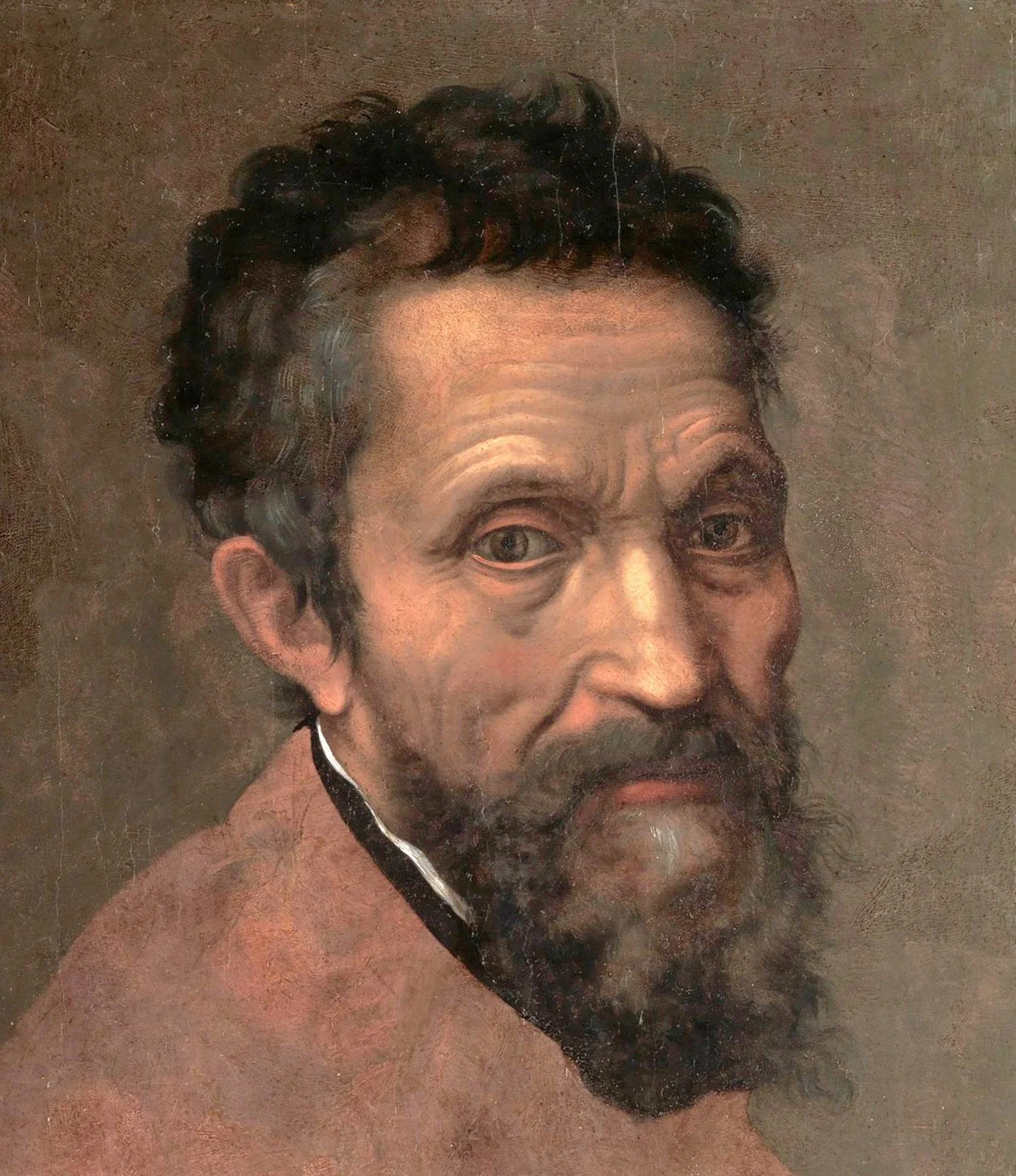
Michelangelo did, and for many years would, cultivate the gifts of poetry, science, philosophy, and art. He would cultivate all of these things, making beauty out of the world, painting the Sistine Chapel, making sense of his existence, and creating paintings that still inspire the world today. He did all of this as the Medici family reigned supreme from Florence and controlled, with an iron fist, all who opposed them or had any thought of some other form of rule. In 1527, the republic would revolt against their rule, and in 1528 and 1529 Michelangelo would be appointed director and designer of Florence’s defenses against the family. It would be for naught, as they regained their power, and forces loyal to the Medici and the Holy Roman Emperor reconquered Florence in 1530. That is the funny thing about it: as much beauty as Michelangelo gave to the world, as much inspiration as he birthed, it was all done through the blood money of a family filled with tyrants that loved the arts, or at least understood its purpose. In that, I understand the duality of this life and of this love. Of my love of her and my love of this. As much as I want it and need to fulfill my love, it cannot be sequestered. It is funded and held up by the many who actively want to hurt and take away from it. That is the killing joke, the joke that I laugh at reluctantly but cackle anyway. My laugh turns melancholy as I drop my head on the couch cushion and wake back up on the shore, and there she is, here we are.
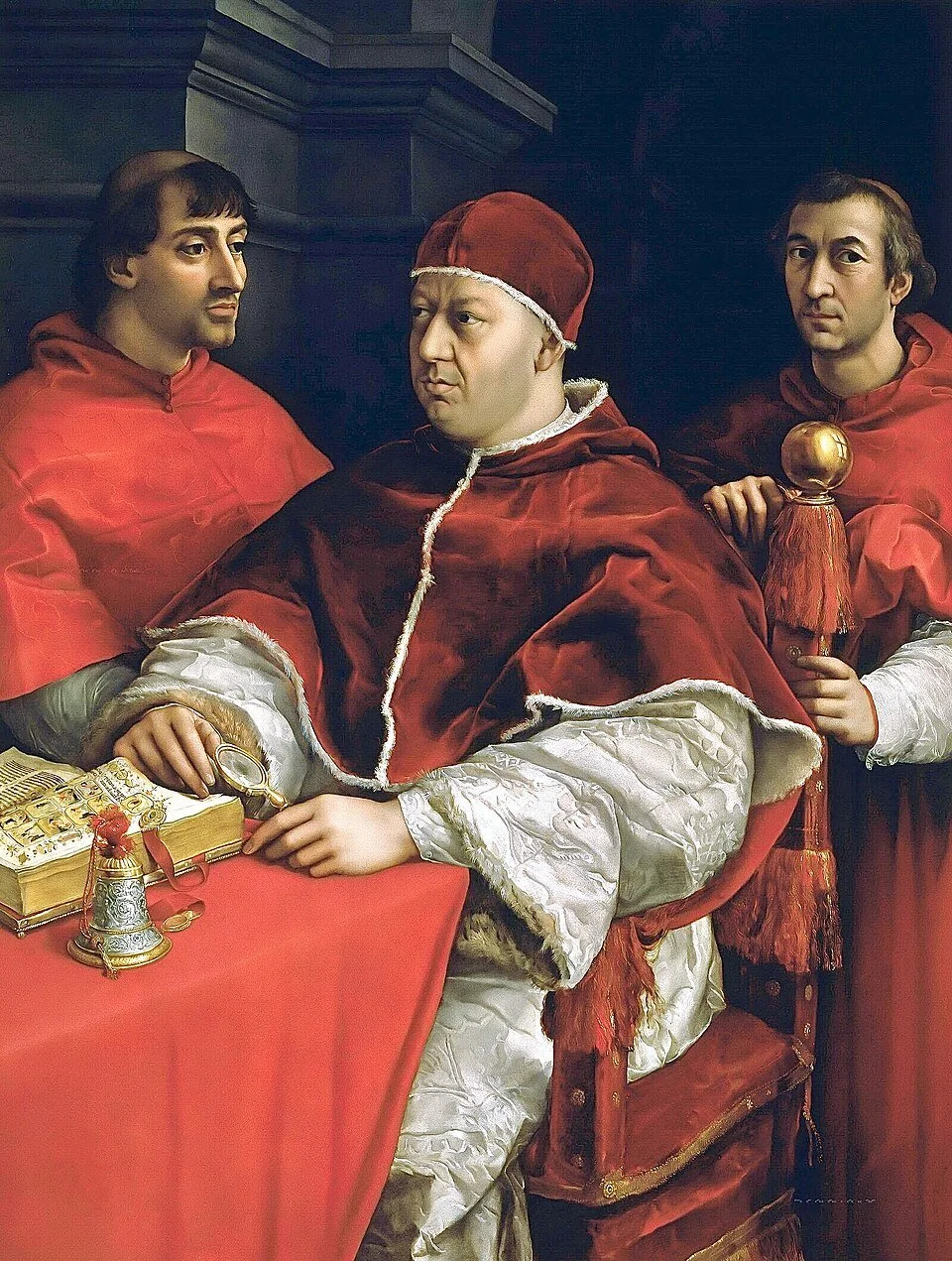
We sit there thinking about this and realize that, as much as the Medici supported him, many others did too. Many collaborators, pupils, and apprentices helped the man acquire the standing that he holds. For every achievement he had, it is in part to the collective that allowed him to make it. He interacted with many philosophers and writers, including Poliziano, Marsilio Ficino, and Pico della Mirandola. He studied classical sculpture under Bertoldo di Giovanni, and of course Ghirlandaio was his teacher. We begin to understand that even between ourselves we are nothing without each other; just like between my two loves, I am nothing without the many people who have graced my life and made it, and my works, better because of how they have blessed me. That duality is not just one of harsh beauty but communal growth; as much as fear overtakes my thoughts about what love requires, we understand that all it ever really needs is people standing hand in hand to make it real.
Here we are walking in the desert together, seeing all that we are good for, all that we have done and can do together. That the sum is only the sum because it has found its place among friends that allow it to be. That the I is made whole because it stands up among words that push it to the top of the peak. In that we understand the importance of one another, of her and me. Still, do we really need each other? Is this inevitable reunion that follows me every day a necessity? Dreams of what can be and nightmares of what has happened: when we see these things together, when she holds me close and tells me each one is fine, when we sit on the shore, walk the sands, or travel through the town, when I see all of these things, are we really meant to be? I continually tear away because, with her, I feel at home in a world that does not deserve it. It makes me agree with the collective hum that leaves traces in people as they follow the lemmings to the cliff.
I refuse because the "group in equal parts" fallacy is a fallacy. It leads to the abusive cycles we find ourselves in every day: the agreement, the following, the lack of realization, and the giving in to what will be. That is the group, and I refuse to be a part of it. Not as a contrarian, but to the farthest possible side on my own spectrum, I refuse the group because it will always fall to the Piper’s whistle and be whisked away, happy as the water dries up and systems abuse it. The group has always allowed it to happen, just as it is allowing it all to happen now. In that, she brings me close and reminds me that, like it or not, we are the group; we are the people. We, the people, have done and will do many great things. We, the people, live in a community with strife and love, and it is in that battle that we win and lose, but we fight each day. We, the people, are in community because, since the beginning of time, community has been how we have made sense of this whole thing; we understand that even something as simple as putting words down on a page cannot be done alone. We, the people, realize that we are the people. We thought about these things for a while, and the grains of sand that fell between my fingers started to harden into steel and form bars once again. I still had an opening, as the door had not yet fully closed, and on the other side I saw the light of the apartment and my laptop. She held my hand, reminded me of what we had done, and asked me to stay longer. I was faced with that same decision again and was still not sure what to choose.