Brass Tacks: The Fortunate Turn of Fate called Imperfection
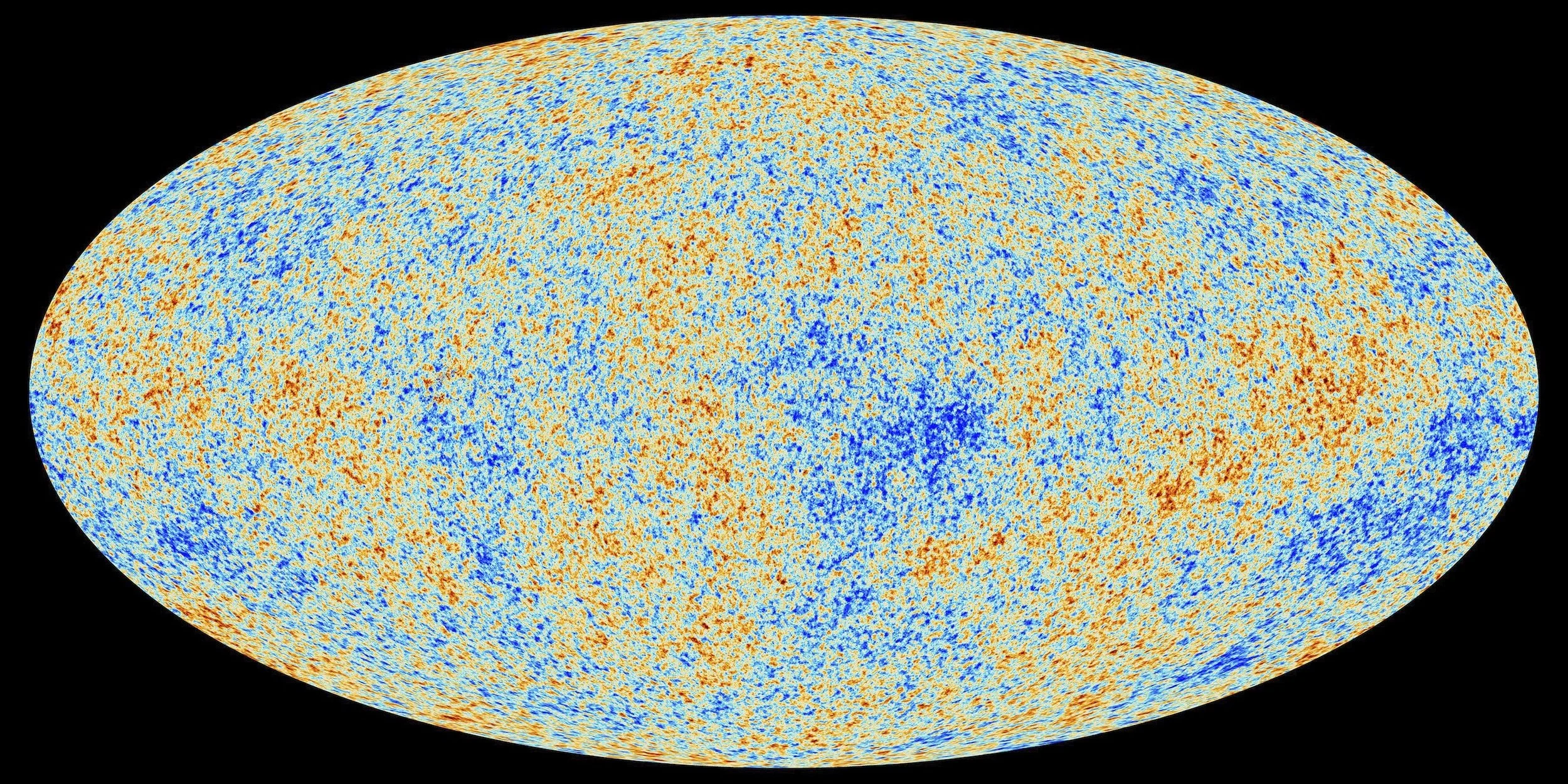
In the 1960s, two astronomers set up telescopes and heard a constant hiss in their antennas that they could not get rid of. At first, they thought it was birds, so they moved the telescopes. But still the hiss was there. They kept moving it, trying it day and night, cleaning it; nothing worked. It felt random, a mystery with no source. They would later find that this random noise was actually the cosmic microwave background. It is the afterglow of the oldest light in the universe that has traveled from the Big Bang for billions of years and appears on Earth as this radiation. People have mapped these microwaves in detail. They found that at the moment of the Big Bang we were unbelievably close to being completely ordered, to being unequivocally perfect. Temperature variations were less than one part in 100,000; it was near supreme order. Although somewhere on that spectrum between perfect order and perfect chaos, as we were a micro decimal away from perfect order, there were tiny temperature variations. Over time, gravity began to form around these variations, which became the seeds of every planet, galaxy, and thing in the known universe. It was because of the tiny moments of deviation on a path towards perfect order. If it had been more disordered, nothing concrete would have formed just constant emptiness with constant black holes. Completely ordered would have offered less than that; it would have offered nothingness. The imperfections are what have created the physical manner in which things can form. The deliberate place on the spectrum between order and chaos. I learned this story some time ago about how God formed this whole thing, how he left clues and answers for how to live in the world through its formation. I try to hold to it and remember this every day.
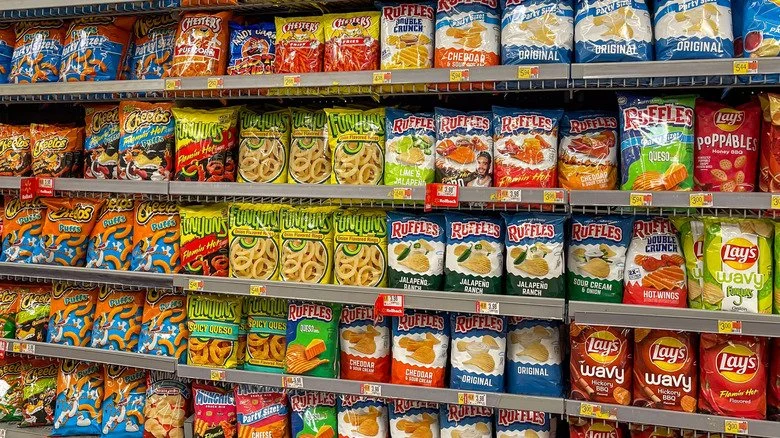
Chips will always bring a smile to my face as my days go by. The only word that can describe what plagues me when it comes to chips is addiction. An addiction that is welcomed fully, gladly, and wholeheartedly. An addiction that has been there since walking on four legs in the morning, two legs in the afternoon, and when I walk on three in the evening. Addiction in this childish, non-serious sense of the word is probably something on the spectrum from a love to a need. Does the consumption of classic Lay’s chips cripple me? No. Do sour cream and onion chips affect my life and interfere with it directly? No. Do Hot Flamin’ Cheetos cause me health issues? They actually do. In defense of the Hot Flammin’, this is all things. Too much of anything can kill you; even too much water kills you, so of course eating too many chips negatively affects the body; that is what it means to be human. Humanity itself lives on the spectrum between love and need. A constant tug back and forth and careful trek to be sure you do not fall outside of any end of the spectrum towards real addiction and hate. It leads to a kind of regulation, or self-monitoring, of what you do and what you consume physically, mentally, and spiritually. Self-monitoring the “too much of anything” that can kill you, especially too much of a bad thing. Though I will say it again, something about chips brings me back to it. It is as if they turn me into nat around trash. Something about this food holds me, forcing my molecular system to interact with it. Pop, Coke products for the uninitiated, used to do the same thing, but my mother interfered when it came to that, and thank you, Mom. Though when she interfered and stopped me from drinking pop, forcing me at a young age to put it down, it worked. Something that blessed me in all bottles and flavors was soon absent from my life. It would have had an adverse effect on me, sure, and many thanks to her for making the right decision, but it is gone now. Pop is now an occasion drink for the holidays and the Super Bowl, and nowhere else. There we see the irrationality: the hands that still wrap around my throat in this stranglehold. You never really can let it go. No human being ever really can let a part of themselves go, not fully. It will always show up somewhere else, be externalized in another thing, or be used in moderation. Imperfection is what we are; it seems to be on a spectrum between love and need, swaying back and forth by the chilling breeze under the pale moonlight.
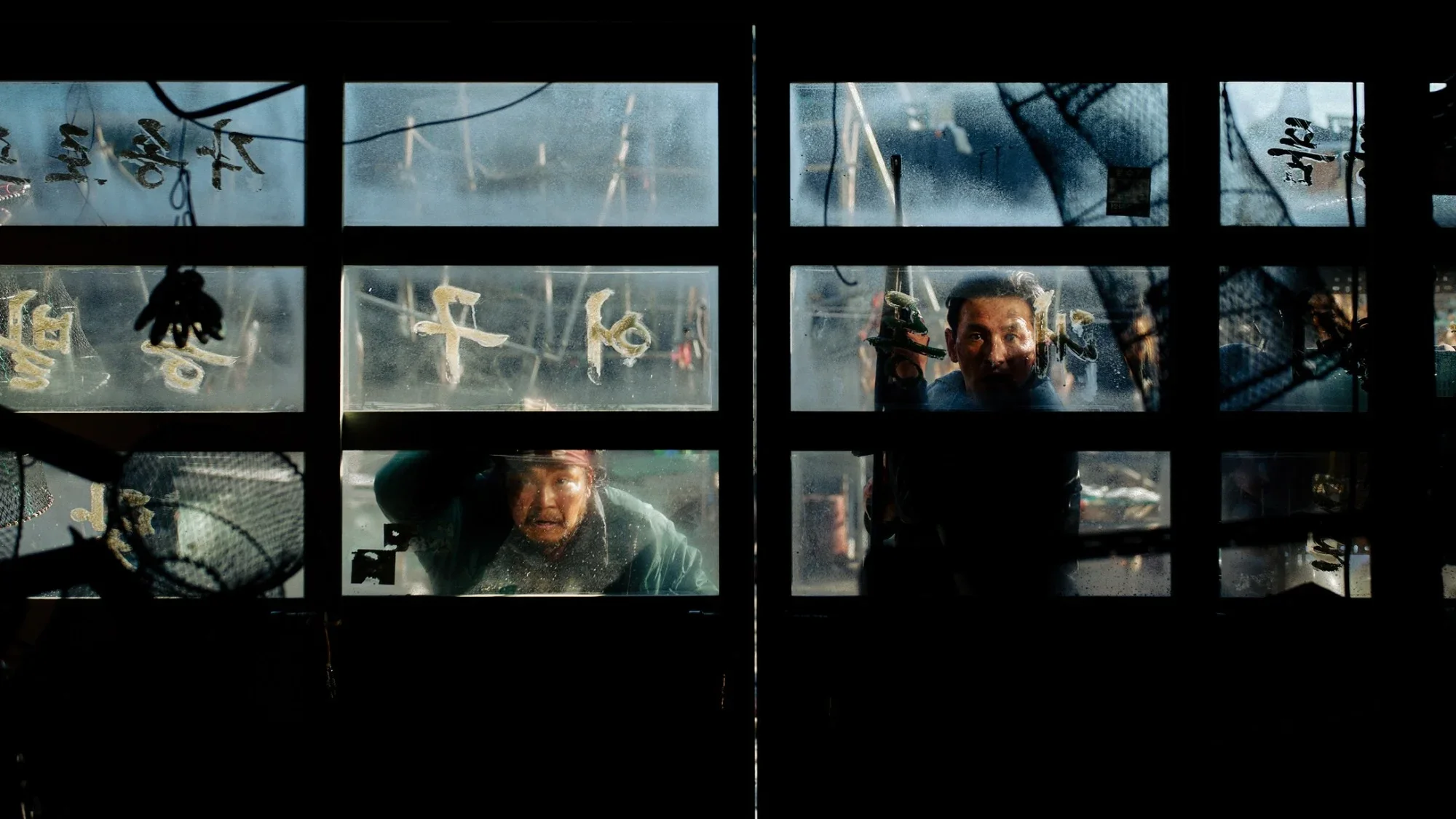
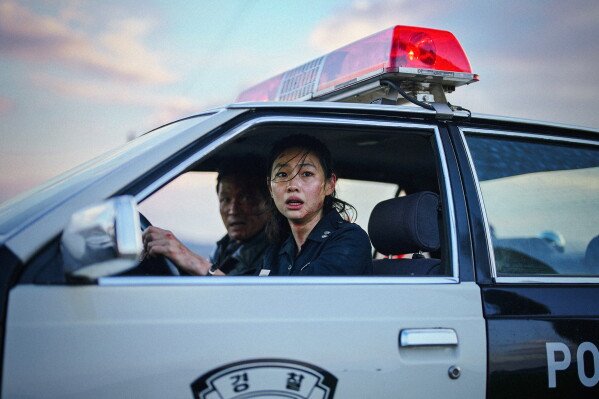
Hope this week placed me back on that spectrum, as many things do. Given the film just released, there will be no spoilers here, but Hope is one of those films that will stick with me through the rest of my life. Hope is my type of film, my type of action, my type of comedy, and my type of mystery. Hope is in many ways a part of me, like the projection of the soul amid a dance on screen or the supplanting of a lost piece of your soul through interaction. Great things that meet you at the right time on the spectrum will do that. They reveal a truth you had no thought existed, making whole the piece you thought complete. A film that starts with the examination of a dead cow in the middle of the road, as it looks to have been killed but, more importantly, not eaten by some predator. It is concluded that it could have been a tiger, jokingly, and one character is convinced to believe it fully: the police officer. As he rides into town to warn the people of the situation, things get worse and worse, and worry turns to fear as black smoke turns to explosions and the living become newly dead. The best thing about the film is the feeling of confusion, which the director Na Hong-jin is a master at conveying beautifully in his films; The Wailing comes to mind immediately. Here, confusion is partly about the decision to care for another, and where to turn in times of heartache when everything seems wrong and right; this decision is driven by fear and an immediate acceptance and belief that something is wrong and needs fixing. An equally devastating and consequential decision for a different reason. A confusion shown beautifully by hiding the monster and showing only its carnage and the destruction it causes off-screen. Showing the pain and anguish that it leaves behind in its wake and the fear that it presses upon those it comes into contact with.
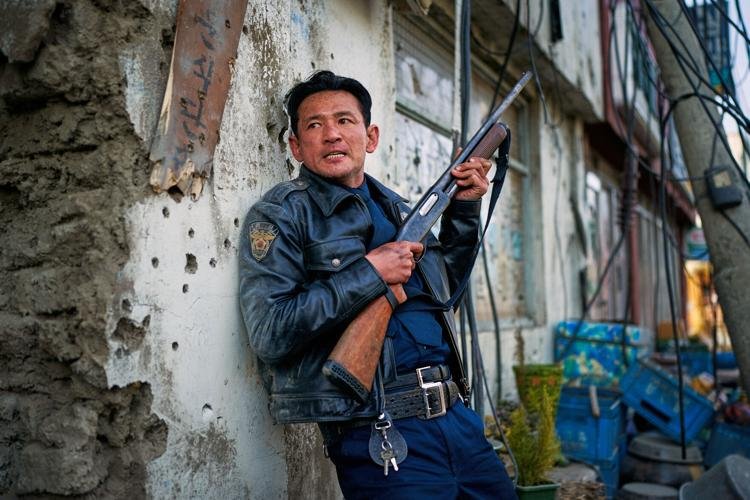
A group of people who have seen and lived through war, who know the feeling of an outside attack that comes with intentions hidden and shown, and a group of people who chose not to be forced to see that again. A group of people who bear arms without question because of the price of what the question costs you, without thinking of the importance of the question. It is a decision that moves on a spectrum between love and hate, landing on “I don’t know.” The film speaks loudly and quietly on these and other issues, such as immigration and imperialism, but my favorite is the cow. In the beginning, their conversation is about what attacked it, and through the rest of the film, the cow shows up and is used. A beast killed, ridiculed, left behind, examined, ignored, welcomed, and the gamut of thoughts and feelings many humans give to cows. Since the film is new, the leash has been tightened, but Hope, more than anything, reminded me of that spectrum because life is like that all the time. What you love is what you need, and that need and love show up as small and large imperfections in your life. You are a broken vase from the beginning. Ten or a million tiny pieces put back together masterfully. Even still, you can never really be without blemish or scar, and why would you want to be?
A video among many that have come across my face, damning the chip, found me recently. A man walked into a store and bought a small bag of sour cream and cheese chips, the Ruffles version to be specific, and went home, poured them all into a bowl, and proceeded to burn one chip. Was this some fun little experiment? No, it was done to make me feel bad about myself and tell me how wrong, how simple-minded I could be for enjoying chips. The chip burned, and oil dripped off of it; no dust, all it did was turn black. The man in the video went on to say that the same refined oil can build up in our arteries and lead to cholesterol and something terrible like heart disease, and that one chip has 30-35 drops of oil, and most people finish that small bag in one sitting. Someone like me, when they were young and unchecked, devoured a family-sized bag in two days. In the caption, he lists a plethora of diseases and problems chips can cause, which are: increased bad cholesterol (LDL), fat accumulation in arteries, higher risk of heart disease, weight gain & belly fat, bloating and acidity, low energy & sluggishness, high blood pressure due to excess salt, increased cravings for more junk food, and poor skin health because of processed oils. Chips can kill you.
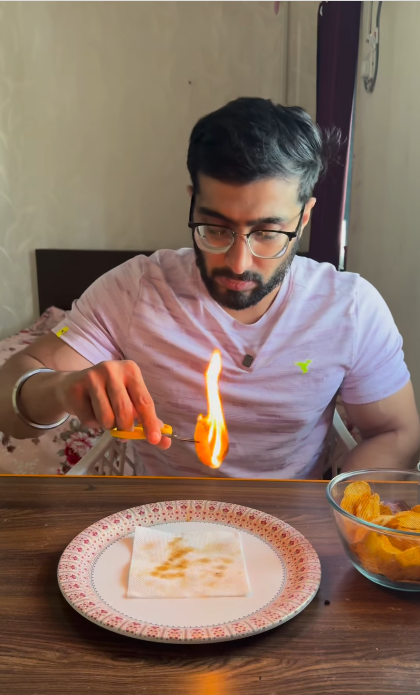
Something so small and insignificant, eaten over a long period of time, can take your life. No different from the mosquito carrying disease or bullets dancing through the air in recital, strategizing each pirouette in their flight, chips will one day have the same effect. He goes on to list alternatives, but no need to bore ourselves with those; it is the chip that we are in community with. A chip that negatively affects your life with each piece of enjoyment you receive from it. Like a cruel riddle given by the Sphinx, it becomes prophecy or apocrypha to others. No matter where you land, its place is determined, and it will kill you. Like any bad relationship, how can you bring yourself to turn away from it, and should you? With all the great things it brings, is this bad much worse than that? Death sits around every corner and in every back alley street. So you accept the negative and directly accept bad for the body in every way. Everything in moderation, but what is moderation to something that you love? How can you have just one? Addiction in this childish sense can never let you go, and you stay in its hold. You hold each other's hands because perfection is never a point. After all, it cannot be attained. Realization or a lie: you refute the idea of it because perfection is not worth the cost of you.
My love for Hope runs deep, but it has many, many problems. The characters, as interesting and captivating as they are through their performances, could have used more development and some growth. The ending is a cliffhanger in a film that could have been such a beautiful story; even if a sequel was planned, this story could have been finished. The ending is also jarring; it stops me from using harsher words. When you see it, because I still believe, like a supportive mother watching, screaming for her benched child, all should support and watch it, you will understand what makes it feel so out of place. In its defense, I see what Na Hong-jin was trying to do: wrap the themes together and everything he had shown up to that point. I could hear what he was trying to say until he stuttered, began mispronouncing words, and lost me. This stutter is most prominent toward the end but appears in other brief moments in the film as well; still, it stands out so much that you lose focus on everything else. It is a stutter that, after seeing the movie days ago, still makes my body ache for diagnosis and cure this September 13th. It is something to fix, something to remedy, because as it is, it is broken; it is imperfect; it is lacking in all measure. It needs to be made right so my love of it can be just. So my love can be actualized. My love is there even with its problems. Something in me wants to overlook them because of how special Hope could have been, even though it is still special to me. As funny as the film Tony was, some of the conversations and stories told in Hope made me laugh harder. As beautiful and expansive as The Odyssey is, Hope, in its first and second acts, had me more engaged in the struggle and burden the characters faced as they tried to protect their town. The mystery and intrigue in The Samurai and the Prisoner stands tall, but the mystery of what is attacking this town and leaving such carnage in its wake had me equally as worried for these characters. Spider-Man: Brand New Day had so many amazing action set pieces, but the somewhat intimate yet horrific action in Hope made me connect with these characters’ struggles even more. On the spectrum of love and need today, I fall on both ends: my hand shakes with a scalpel as I try to fix my precious, screaming at the doubters.
Even if it kills me, at the end of the day you have to be fine with that. The amount of chips that I eat is not biblical by any means, but it is more than the average person. I am a healthy person who does many things that I like to think offset this looming outcome. Even with these and other excuses, I refuse to put down chips or switch to a healthier option because I love chips. I want what I want, and I like what I like. Chips are that, and chips are where I choose to stay. As humans, we make these choices sometimes through health or sense, but in most cases, to me, they’re existential and significant to the soul. If a man puts down what he loves in pursuit of what he could be, what is he left with? What good is my perfection if it is discarding all that has made me me? A goal that can never be achieved why strive for it? Strive for better, yes, and to be a good person in all accounts, but a perfect person? One who lives in perfection? I cannot begin to think about what that looks like, nor do I care ever to see it, because the blemishes are the point. The cuts and bruises give you your color; they make you who you are. They are chips, your small ticks, your eating habits, your stutter. If these things affect you so negatively, they are harmful; then yes, maybe take them away, but they are you. They all make up the story of you as a person, where you have come from, and what has brought you here. In a world and time where everything is maximized, fixed, and examined, you start to lose the forest for the trees; you begin to strive for something that isn’t worth it and lose what makes each of us special. Imperfection has always been the wrong name for it; the specifics that make up each of us are the most beautiful and unique things about us. That is what gives your name significance when someone hears it: not you trying to be perfect, but the things that make up you that others see as a problem and the rest see as something to love. That is what chips are to me; that is why I can never really let them go. Through circumstance or choice, my habits have changed: they are not the same classic Lay’s or sour cream and onion as they used to be; now I eat a much healthier chip. I save the sour cream and onion and wavy Lays for special circumstances and days when I crave them because it is a balance. Acknowledge your imperfection and understand what it is, but do not let it take hold of you. Do not let it bind you with agreements and chains of confirmation and servitude, because let us not forget these products were made to cause addiction and were constructed to inflict service through consummation.
Is it evil Incarnate? No, but it is built to extract a part of you. In this understanding, in this acknowledgment, what one should do is realize that you are better than it; you deserve more because you are more, so do not sit on the dark side of the spectrum, understanding this flaw and imperfection, and shift it to minimize harm and extract the best use you can from it. My choice is deliberate: I choose the chips I eat and when, because I have always loved them, yes, but even more than that, when I place them on a napkin or piece of paper towel, I am reminded of enjoying them with my aunt or my dad. Watching a show or movie. Laughing, talking, and crunching all going on at the same time. Figures who mean everything to me, and one who I may never have that experience with again. That is what chips are for me, so if I substitute or remove them for “perfection,” what will that cost?
The word masterpiece is quickly becoming one of the most despicable words, buzzing by my face like an insect and constantly taunting me. Flawed masterpiece, broken masterpiece, unfinished masterpiece, forgotten masterpiece, and more masterpieces this and masterpieces that. A work done with extraordinary skill, especially: a supreme intellectual or artistic achievement or a piece of work presented to a medieval guild as evidence of qualification for the rank of master; those are, according to the Merriam-Webster dictionary, the definitions of masterpiece. Nothing in there says perfect; nothing says without flaw or misstep; nothing in those definitions references the idea of walking the thin line without missing it for a step or two, maybe even five. As history and time have always done, words lose their meaning and take on new ones. “Perfect” is used more nowadays; “masterpiece” has become synonymous with it. This idea that something is a masterpiece is perfect but still flawed and broken; well, the truth is that everything you love and enjoy is flawed and broken. Even the films we hold up as perfect are not perfect; the films we call masterpieces are not masterpieces. The term seems born of a need to justify one’s love and appreciation of something. That it must be a masterpiece because I enjoy it, because I love it. It has to be near perfect because my favorite director made it, and he can never be wrong. The thing that turns this blazing flame fueled by hubris and ambition into the grinning breeze is that it is okay to love what you love. There is no need to justify something or classify it so that others understand you. What end does that bring, and what point does it serve? I thoroughly enjoy the Marvel movie Eternals. For all its faults, which it has many, the choices and ideas that it makes, alongside the creativity and uniqueness, have forced it to have a special place in my heart. It is no masterpiece or perfect movie, but I enjoy it every time it comes on my screen. Is Hope a perfect film or masterpiece? No, but it is, without a doubt, my favorite movie released this year. Like brothers bound by the screen, Hope made me laugh, feel excitement and anger, feel confusion and some sadness, see and realize things about other people, see how we choose to determine truth and hold beliefs, and more I will not spoil because Hope is that good. These feelings and experiences become a part of you in funny ways that you cannot shake and that you should not, because who would ever want to give up themselves for an idea or a concept? What good does that have to you? Hope is many things, but most of all, it is mine. That mine that makes me the person I am. It’s more than finding a lost brother; it’s finding a piece of your soul that you had misplaced some time ago—a fragment, chipped and battered but yours. A lot will come with refitting it, but it is all worth it because that ugly, broken thing is you.
An old friend once told me that just because you are known for something does not make it right. I can’t say that I am known for it, but I am a very matter-of-fact person. Matter-of-fact in the sense of sometimes lacking understanding of people’s emotions and feelings. In death or peril, in struggle, sometimes I lack their idea, their conclusion of it, because of my own experiences and beliefs when it comes to encounters. There are worse flaws, but this one is harsh, as I have come to understand. It is my imperfection, yes, my flaw, so do I embrace this one as well? Do I provide a healthier version during the week and become fully me on the weekends? No, that does not happen either. Just because you are known for something does not make it right. As people, we are imperfect and flawed beyond measure, but that flaw, that problem, can become something good. There is no need for it to cause harm in its wake. From a young age and through life, I have learned to shape this flaw, this imperfection, into something good. Does it come out in the worst of times? Yes, but now it’s used to help others, to make them feel seen, feel comfortable. Instead of the hug of a switchblade, it is the embrace of a comfort sheet. My imperfection now provides clarity and stability rather than a barrier; it is a boon. When a brother or loved one struggles, as hard as it may be for me to understand it and make it a concept in my own world, I know it is real because they are feeling it. They have had a bad day, they have had a loss, they have been hurt, they feel forgotten, and in that solitude or sorrow, if there is anything I can provide them, I can. An ear to talk to, a shoulder to cry on, or just a presence to be beside them I can provide that.
What once caused harm now invites love. Like the temperature of the universe, less than one part in 100,000, this human that I am is lacking in complete order and lacking in a seen or observed perfection. In that lack, like this world, galaxy, and universe, you start to see; maybe that’s the point. Imperfect in all accounts, but the struggle, the intent, is to make that crutch, the blemish, into something beautiful. Hope could have been a disappointing film I hated, but I chose to love it. Chips could have grown into an addiction, an abuser of craving, but it was checked, and it keeps the love I feel for them. Just because you are known for something does not make it right. Still, we know the imperfections, the flaws, the problems that we are, and if you stare into it long enough, looking past the abyss, past the furies as they scream, past the void and into the soul, you see the spectrum sitting there all alone. Luckily, when you see that spectrum, and it sits there like the monad holding out its hand or a demiurge marooned, looking for companionship, you realize you get the choice of what it is that you do.