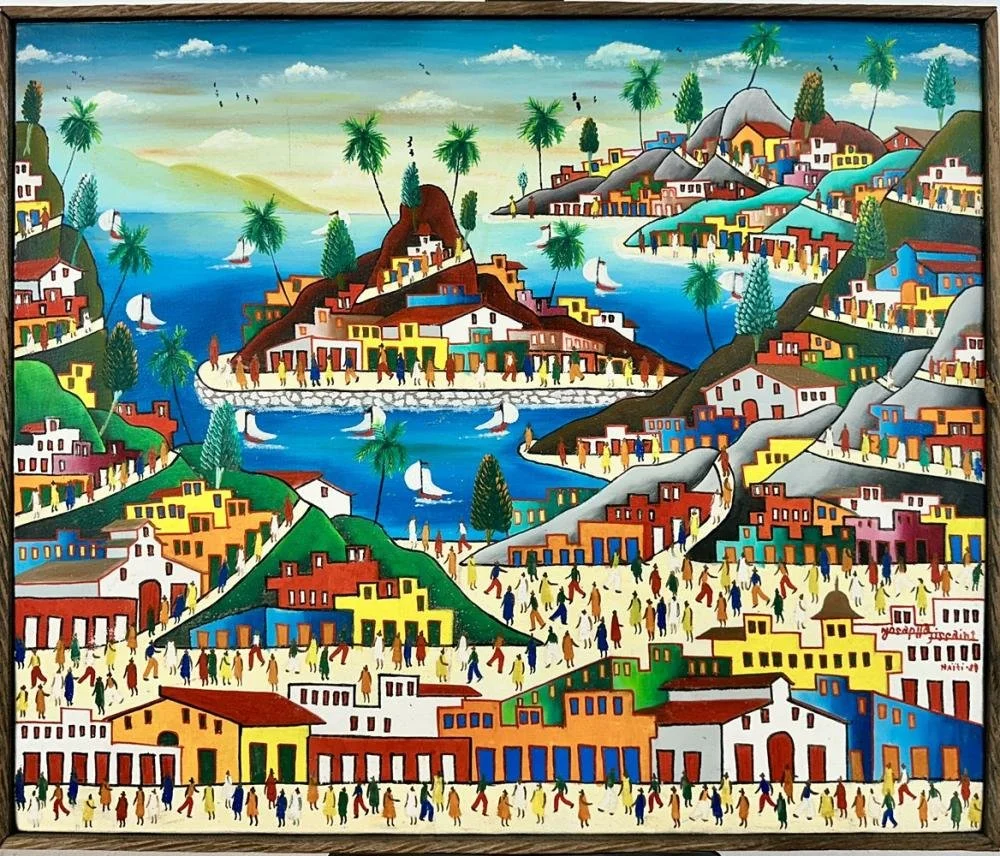
Village Scene by Josapha Tissaint
Have you ever thought about the word chairman? Chairman is a term for a man or woman in a position of power, whether in government or a corporation. Chairman of the board, chairman of the committee, department chair, chairman of whatever governing body or board you want to name. We use the term constantly in a variety of places and organizations, and we, in common terms, understand the meaning behind the language and the purpose of a chairman. Still, no one really knows what it means. It has just become a term, and it is always this use case of a man or woman in a position of power that is what it means to hold the chair to be a chairman. What is this fascination with chairs? Such a common place item, no different than the lint as it clings to the mountain called Helmut Lang as you pluck the sad creature from your items, flinging it into the rolling abyss streaked black with white and yellow lines. Maybe chairs have always been here, always just a part of the way things go? Like all things, there is a progenitor, and chairs, more than anything, have one. Chairs were not always common; they were not made for all people and, more so, were made for very few people. So chairs like thrones were placed in a room for one person, usually back then a man, to sit on as the people surrounded him. Around him, they didn't stand; they sat on the floor and listened as he spoke or decreed, from a throne to the simple wooden chair you picture in your head now. That is the life and beginnings of the chairman. Sadly, not very inventive, but clearly it has aged well enough, or at least the point has been labored since chairs have become similar to the proliferation of New York rats; we have chairmen in each seat in all parts of organizations that command power, and power they retain. That is the course of the mortal coil in time as we age, as we grow older and younger in a sad cycle of birth and renewal; end and beginning time strips us of our language, the meaning of the use case of its purpose. Same as mountains that are sanded away by the Lord’s hands moving as they spark through friction; same as time shrouds what our words, our very understanding, mean. It falls away so far that it becomes just a word, a term we all agree on and understand, and we have it without ever caring why. Is this a good thing? I doubt it. Is this on purpose? I cannot be sure, and that bothers me the most. What I can say is that, if anything, chairman is no different than villain, hysterical, or gossip, all words with meanings and histories that have changed over time through circumstance and interpretation and association. All signify the shifts in worldview as humans evolve and partition each other, growing disdain, respect, contempt, or adoration. Words and their birth and evolution are how we define ourselves, how we separate the animals from the men. We claim our laws are our rules, but these are our definitions, the traditions, the ones we all stick close to; we all demand respect and hold each other to them. You know who the chairman is; after all, so listen to him; pay attention; be quiet as he speaks.
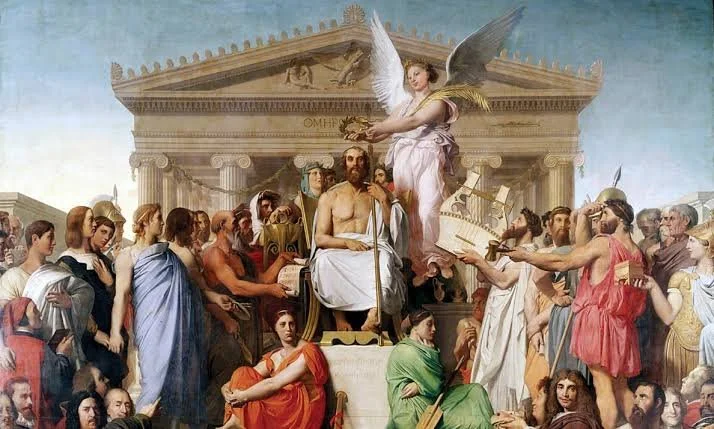
The Apotheosis of Homer by Jean-Auguste-Dominique Ingres
Language is a beautiful animal yet a belligerent one. It is equal parts obedient and a turncoat towards the nearest point in time. After a while, you forget which side it was on at the beginning, never truly understanding how it came to your porch, missing the black smoke from the houses it once graced down the street. Villain, hysteria, and gossip are the Cerberus that tell me most about the sick animal that becomes part of the family and then tradition. Villain: we ascribe to the enemy or main opposition of a story. Villain was originally derived from the French villain and the Latin vilnius, used to describe a farmworker or a peasant. Over time, as it flattened hills and raised plains, its regularity turned into viciousness as it hungered and needed any home in the world, so the rich brought it in and turned it against everyone on the outside. It was no accident, no failing, that the word is now used to describe someone bad, when it was once used to describe the workers and lower-class people of society. Villain itself is a reflection of the contempt the rich held towards their workers, towards their hands, as they may have asked for more or fought for more; they were blessed with revulsion and seen as heretics to the norm now and everyday evil. A tradition, a feeling built over time. Can this become tradition? The act of words forming, changing, losing, and gaining truth at every turn. No, to work as tradition; it does not seem right. To describe, yes, but to be would go against what a tradition is. A tradition is an action or event passed down that conveys some meaning. Can a word become that? Can it be that? Could hysteria represent that? A word from the Greek hystera, meaning womb. As time went on, medical traditions and practices associated it with physical and emotional symptoms in women’s reproductive organs. Shaping hysteria as a medical diagnosis to reinforce stereotypes about women being irrational and excessively emotional. That may be where the tradition lies. In the thousand blows, etymology lands on the other side as you last the fifteen rounds; you understand words deeper than the cut of action in tradition. The very soul of how women are described and treated in the medical field lies in the word used to place them. As I step back in the ring, I hear gossip: the word comes from Old English godsib, used to describe a godparent or someone spiritually related to another. As the word grew, it came to mean close companion, then was associated with close conversation, and now malicious or idle talk. When these words come up, they are more than the sum of their parts, and like all great traditions, you rarely understand how they started or where they came from. They are like that old dog begging for food at the table: you don't know where he came from, who bought him, or what else he eats, but you know he’s supposed to eat your food, and that’s enough to give him some.
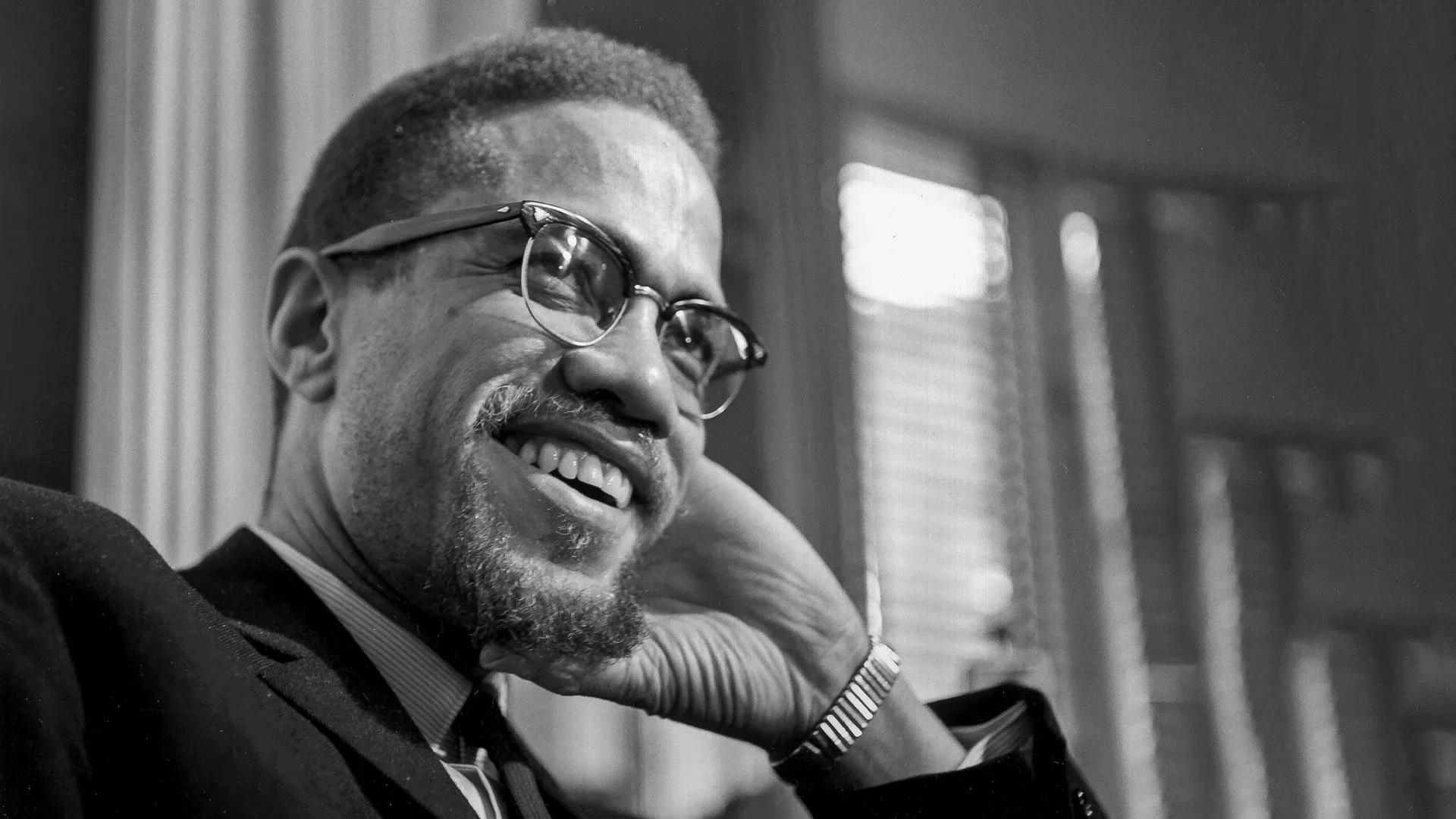
The dog circles me in the kitchen as the steak cooks. Steak is cooked many ways: medium-well, medium rare, even rare, but I still have to eat it well done. Truth is, I occasionally will venture out to eat the exotic medium-well steak, but well done is my home. That is my tradition, and a tradition many Black people share. Why is well-done steak the norm for us? One of the clearest cases could be that, through slavery, given the leftovers, worst and spoiled cuts of meat, you needed to cook it well done just to make it edible, killing all the parasites and turning the afterthought into a meal filled with love. Well done, then, is a word born of survival. A term used to describe a people on the brink and facing constant hate and ill intent; this is the only way you can move past it, move from it, and find the small beauty that comes from the ouroboros taking form around you. Food through love through care through the family unit constantly broken and put together “well done” is where you find the equilibrium. Well done seems to fit there, but it comes up in another place as well; it finds itself curled up next to Malcom X during a speech he gave at brown university that he speaks about the importance of understanding where the dog came from: “I don’t think any of you will deny the fact that it is impossible to understand the present or prepare for the future unless we have some knowledge of the past. And the thing that has kept most of us—that is, the Afro-Americans—almost crippled in this society has been our complete lack of knowledge concerning the past.” As he argues in the speech, historical amnesia not understanding why the dog asks for scraps, how it came to wag its tail is a deliberate mechanism of control. Cut off from history, language, and your roots, you are left crippled in navigating the present you sit in. You are left to hobble like a lemming behind the conveyor belt of tradition without a clue why. A beautiful speech of intellectual and linguistic trappings and nets hiding history and language, using these to coerce and hide and lie to black and brown people around the world from what was happening in the moment and what they can be and do to break what the system has done to them. The speech Malcolm X on, killing Afro-American History eerily rings true today, but the importance of this speech is when he talks about our term or lost history, well done steak. In this section, Malcolm X describes how Black people come from a long line of tradition and history as builders, cooks, artisans, and the like, compared to white people, who, in the vast span of time, have only recently come to it. He then goes on to speak about steak, “They didn’t have that knowledge in Europe, not in those days. They didn’t cook their food in Europe. Even they themselves will show you when they were living up there in caves; they were knocking animals in the head and eating the raw meat. They were eating raw meat, raw food. They still like it raw today. You watch them go into a restaurant; they say, “Give me a steak rare, with the blood dripping in it.” And then you run in and say, “Give me one rare, with the blood dripping in it.” You don’t do it because that’s the way you like it; you’re just imitating them, you’re copying, you’re trying to be like that man. But when you act like yourself, you say, “Make mine well done.” You like cooked food, because you’ve been cooking a long time; but they haven’t been cooking so long—it wasn’t too long ago that they knew what fire was. This is true.” Instead of survival food as tradition and history, the idea of “well done” is used as identification. Rare and black people eating rare steak is a sign of conformity and acquiescence to the need to be like the system to become the system. Whether they mean to or not, they choose rare because it is what is acceptable; that is the rule of thumb. Food cooked well done is what is meant for you; that is how you are supposed to eat it. Food and steak well done is not just something to consume; it is the memory of life itself, of who we are as people. The tradition of cooking steak well done is a tradition of a black family caring for one another, protection and acknowledgment wrapped in something edible. Made with love and care to be shared amongst those you love and care for. Well-done steak is criticized as the worst way to cook it. It takes out the flavor, burns it to a crisp, and makes the meat worse. I cannot say whether that is true or false, given I have rarely left the walls of this city. I can’t say firmly if we are inside of these walls because of Malcolm X or because of slavery. I can say that these walls, this city, everywhere I turn, I see me; I see my sister, I see my niece, my grandfather, and my grandmother. I cannot say if the outside is better or greener. I cannot lie and say some days I want to venture outside, but I can say that inside here I am home, and nowhere would be worth leaving it. Not even if rare whispered peace in my ear told me that it would raise the city taller than others if I left. I would still stay amidst the ash and flaming heap; I would still stay as we built the city back up and faced the bomb the next time.
Behind these walls, as I sit on my porch petting the dog shamefully, it still passes through my mind why this city has to stay so small. All are welcome; of course, it is a city where the doors swing open, inviting in those who want to be a part of it, who want to be with one another. Who eat well-done steak, who give the head nod, who put the plastic bags under the sink, and all the other things the rest of us in the city do. Not to say that is criteria or a requirement, given my people here do different things as they come from many places spanning the world, but those who leave willingly, voluntarily. It irks me. Why go? Why be out there? If you are wrong, be corrected, as I have been so many times before and will continue to be. If something does not seem right, examine it and inspect it as I continue to do; do not follow it without question. I ask these things, and if they matter, and I know they do, these are questions to ask and needed inquiry, but that leads me back to why we even have this community at all. It is a corpus of nature and nurture born to this life, but also learned, and that is the foundation of our city. As much as community is in front of me and beside me, I rarely go back to ask why it deserves that placement. I got up and got some water, looking out at the boys playing and hearing a few calls as the sun started to set, the street lights came on, and everyone said goodbye; it ran over to me and somersaulted through the window. It keeps us alive. It allows me to see myself in my sister and my sister in my brother. It becomes dogmatic: whatever my brother believes, I believe; whatever my sister believes, I believe. Whatever they believe, we believe. We may not all agree with each other and may take different roads, but we will protect one another to the last within these walls. We fight to the last, and we fight with heart, body, soul, mind, and every emotion on the spectrum, because this city is more than a refuge. This city is meant to grow to be bigger and bigger. So that my brothers and sisters here can feel free, and my brothers and sisters out there can as well. This is a city on the hill, but it will grow into the valley, expand the continent, and embrace the world, because we cannot stop until the walls are built to bring together, not to keep out. That is what community is and must be, but community lives in two worlds even outside the walls and beyond this porch. Community is a nice, quaint term, but inside it lives all the fear, loss, regret, and millions of emotions that draw in negativity. All sealed deep away, not to forget, but to put in front of mind so that it never happens again. To understand the history shared and given so that it stays that way. That it stays a history to be remembered so you can move forward and know where you are going. Its importance is to be challenged, to be checked, to be in contention, and to grow, because that is the true protection, the true love at the base of the word.
I left the house, sat back on the porch with a plate of food, and the dog came begging as it does, and I gave some as I saw community clear in view. Community comes from the Latin word Communis, meaning common, public, or shared by many. Some trace it to the Latin munus, meaning duty, service, or gift; it centers on mutual obligation and shared experience. In medieval England, it referred to the common people, separating the villains from the rulers and the clergy. It carried fellowship and a sense of belonging, distinguishing insiders from outsiders: “our community,” “your community,” and so on. In 1400, community referred to shared ownership and people connected by common interests. Today, community is close to this, as we describe a neighborhood as community and a school as community. Community has grown as all traditions do; it has been beautiful and ugly, to the point that it may now be just another term. It describes both social fact and an ideal people strive to achieve, the length of oceans and a sprint to every star. It has roots in unification and severance. It would not be fair to call this a tale of two cities, but as I look at those open doors and see them standing outside, as I look around as people go into their houses as night grows dark, I reminisce about my steak as I sit in the chair. As if something calls out in the dark, a damp, decrepit thing struggles to speak; it asks me a question, and I sit there a moment, wondering how to answer, if I can. I have no answer but the cycles, the history, the constant redundancy. I can only look out past it and use now, with the help of back then, to see where we’ll go. I get up and walk inside, and as I set my dish in the sink, I am sure this community will fall to as it always does, but when they rebuild, I wonder, like it asked, what will community be then?