Brass Tacks: My Brother Solitude
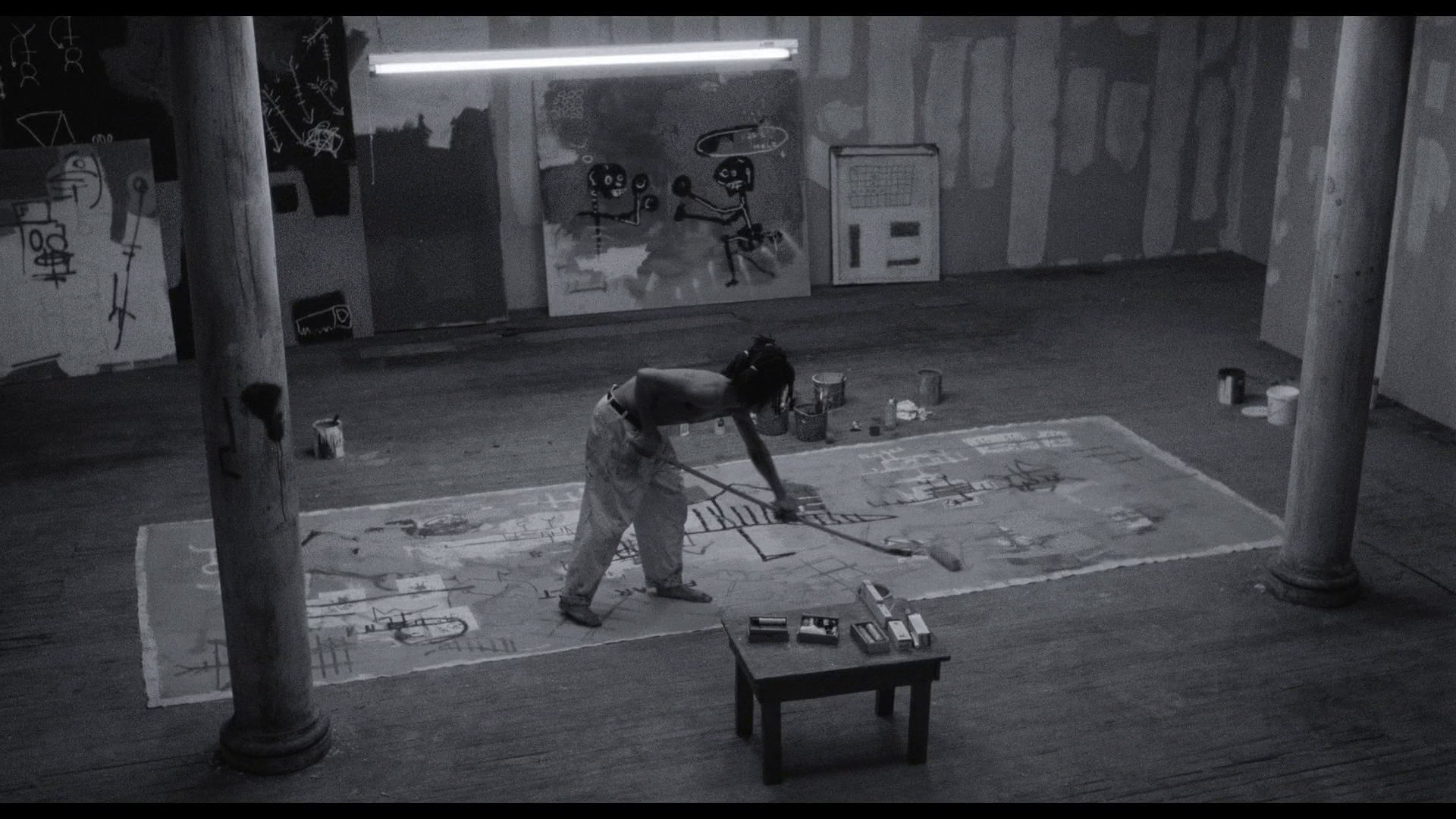
“I just kind of flow, you know. I just catch it. I can’t really explain it.”
“But have you ever asked yourself how you catch it, though? Like, does it just come to you? Is it inspiration? Is it something else? Why do we do that?”
“You’re thinking about it too hard bruh. Just let it go.”
“What are the chances, though, right, that we both do it in the same way? That we just…go. What makes us special like that?”
“No, no, no, we aren’t special, and we don’t do it the same. Ours just looks similar. And bruh, that’s even not how it works. Even similarity doesn’t mean anything. Priests and SS officers both used to listen to Beethoven.”
“You just said—that, we do. What do you mean?”
“What do you mean, what do I mean?”
“How aren’t we the same?”
“Because it can’t be! See, look, it’s just like getting up every day. No one can see you. You’re nasty. You try different things to get better prepared. What worked twenty years ago doesn’t work in fifty, and after a while, you find something that works for you, that fits. But it doesn’t mean anything anyway, because God gave you the morning man. Stop getting ready for them people and just get up for the two of y’all. Everything else is a scam.”
It is all make-believe in a way. Well, to its core, it is make-believe. Fiction, ideas, metaphors, and all that sits at the rim and in between; it’s just an imitation or reiteration of before made real. It’s how we communicate with ourselves and one another. It has always been that way, a reaching out of the hand and a pulling back simultaneously.
Through distance and over time, it becomes perverted. Through the many hands that proclaim it for something that is or isn’t. For the many voices that hail praises and kowtow toward the vicar representing discovered dogma. The dissenters circling like a pack of hyenas. The worst part is that everyone is being laughed at, and no one knows it’s happening.
But the one person who should know is you. You should see it all for what it really is. You should know the truth and falsity of it. For all of the gifts they lavish you with, one day they will take them away and give the same gold, frankincense, and myrrh to another newborn. Then, days after, when time has taken you, they will put it on your tombstone and proclaim how those before missed it, didn’t see it for what the beauty was. Then you’ll have the many who have stayed true, who were devout till the end and never wavered. They always saw it for what it was, deciphered and seen, and saw you for who you were. Although no one can see that, can they? They can only see what it is for themselves, what it means to them, not for what the thing is.
For it all resides in the realm of the forms. That is the trick that we miss. Creator, observer, no one sees it for what it truly is, just what it must be. In that, they are all correct. Dissenters, sycophants, and loyalists alike are all right. For all of my pieces, I have struggled with this, but what fits best here is when I spoke about Change. Change, in that piece, was as much in a state of flux as it was a vow of consistency. With all the choice you have, your circumstances, your small slice of the world, it shows you that you have none at all. In this realization, in this truth, you must pursue it anyway. That’s what makes it so cruel, what turns it into a prison. A branching path with steel walls forcing you down one road. If the worst of us cannot change, what does that leave for the best? All sins are equal, all wrongs are wrong, but that cannot take a being’s ability to want for better. It is innate: to be, to want to be; some rarely achieve it, and society, for many, doesn’t give them the chance to try, even when they were placed in that hole by the greater will. It was ultimately about love, that if you cannot forgive the worst man, and only God can forgive him now, do not hate what he is, but turn your eyes toward the horizon, knowing that you one day will be the same, in the same place, with the same feeling. You did commit vicious wrongs and abhorrent deeds, but you can be better, be something more. You cannot leave it behind because it is a scar on the soul, but a scar worth showing, worth telling of what was and what is now and will be, in truth and in love. That is what the Ship of Theseus was. Although, as I screamed that in the forum, as these words left me and I was left sweaty and catching my breath, the stares that pierced me heard nothing. To the very man, not a single soul heard it that way, and it left me wondering, what is this all for? Whether anger toward myself or confusion with God, it makes you feel as though this is a cruel sentence of your own making. Like after a loss of faith, it seems there is no definite answer or one way about things, of seeing it for what it is, a better or lesser opinion, terms and phrases created by lesser and worse men. Created to separate and divide to conquer and maintain. Great taste, bad taste, foolish terms for foolish men, as it is all just what you like. There is much falsity in things I have found, in my age, through my brother’s words. The very idea of a contest, of a better, of a lesser, is the interference of those who see it as a value, as a good to be deciphered and stripped. Deciphered, yes, but stripped? Used for the aims of others? It does and has been, but that is the opposite of the point, of the reasoning for its beauty en masse, its inherent love, if it was created in it.
We are all wrong and right in the same instance that we see it. That is what must make it a gift. The embrace of the father and the warmth of a mother felt is rightly so. The curiosity, the examination, is rightly so. Being laid bare, seen so fully, you must strip all that you have and contend with the being you know you are, is rightly so! Just remember that in that form, in these states, you are wrong, and that it is a scam. It is not the real thing. That art is not the real thing. Lesser men would ask how and examine why, but I have seen that the curious man, he turns back around toward the marble and says, “Okay.”
Often, self-flagellation comes to mind, with extension cord in hand, when solitude fills me with joy. The act and experience of such a thing are made questionable by the world, in most instances, that of the madman walking, speaking incoherent ravings. Even on this July 9th, the question comes to my mind of whether a human should enjoy an experience such as this so willingly, with so much jubilation and exuberance. It brought a memory to me when I saw Basquiat for the first time. A film about the life of the real New York artist who lived bright and died all too soon. There is so much in the film that stands out and is spoken quietly, but there is one scene in particular that I always go back to.
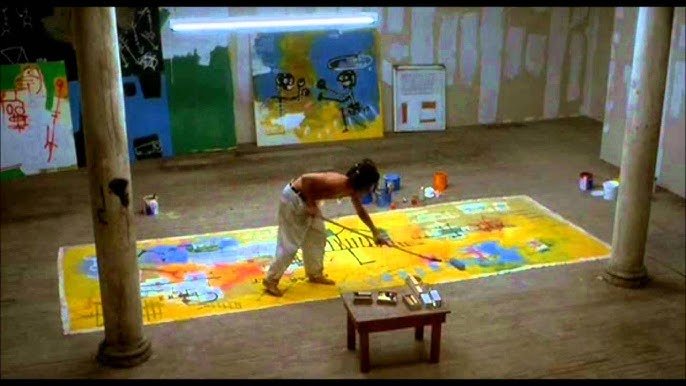
Partway through, Basquiat is in his newly acquired studio in an old, decrepit basement. He is simply painting for the duration of the scene, which plays as a montage as the room fills with his works while he continues to paint a piece in the middle. The standout scene, in so many ways. But as it fills my mind now, and thinking of Basquiat and his portrayal in the film, that is the only time he speaks to us. The only time he truly gives a driving monologue, a dissertation worth the world. Him alone, creating his art, with not one soul coming in to see, speak, or abuse his use of language. What comes after the bickering, the buying, the annoyance of green is worthless and inconsequential to the real point of the craft, of the pursuit. The laying of it all bare in a room where no one has bought it yet, where it sits by itself, alone with the creator, as a human being and an inanimate object scream at their lungs toward one another amidst the cool breeze and low hum that is silence. That’s the greatest virtue of it. Aside from the much-needed quiet and the appreciated input from the world, solitude is a beauty. Two people, four or eight, or however higher the number climbs, do not make you any closer to your humanity. That is all too great a lie given and used.
Resolute, firm in its placement in my life, the quiet has spoken to me and told me more about the world and myself than I could ever give any man credit for. The world encircles you with noise, oftentimes to separate you from such a thing, to withhold from you your right to speak with God. It is the quiet before the storm, the peace before the self-harm and volley of opinions. Here is the only place where you can truly see it before it becomes the battlefield fought between death and pestilence. Painting, writing, building any act of creation is the building of sentences until it becomes an epic. It’s the time in this long and short life that you can understand everything, the world and one’s place inside of it.
Basquiat, having that understanding with himself before he fully became the Basquiat, that the world would know. When people started buying and commenting, you can see how much he lost. Paintings that he viewed as small conversations that meant nothing became priceless and fought over with tears and money. Colors and marks needed profound meaning and analysis. Maybe some of those works have it. Maybe all of them do. The longer one does any form of creation, not as a creative but a being in search of and in conversation with the one he was made in the image of, you understand that every word, every sentence, period, and paragraph break if it needed order and pristine purpose and meaning when you had written it the first time or made the brushstroke, how could you ever look to the page? Especially within me, there is no love for paintings or that world, but where love does show itself is the conversation of the artist with themselves. Of the chatter they have in that small, entrapped enclosure called a studio. At the end of the film, after the credits, they added color to that scene in Basquiat, and I found it made it worse because I already heard him perfectly fine before.
With outspoken solitude, I started to wonder what it all meant, but besides my long soliloquies and my short chides with the world, as much as it is for me, it is for others. Yes, you gain much from your own conversation, but just as much from others who are willing to speak with their full heart and mind. Sometimes the worry comes if this is self-amusement or if my point of view, my thoughts, these musings and their speculative anger and beloved curiosity, are seen and felt outside of myself. As my own piece berated me in my dark alcove, my words were thrown from my body in that forum, telling of how much it disturbed me, how wrong the world thought of it. How it was Theseus’s ship, yes, but a black hole as well. Noble and futile, beautiful and ugly. Even in the pursuit, you can go down the wrong path. No one saw it like that, to the very man, not a soul. It was like no words had left my mouth. It feels like a setup, one of the many truths no one tells you: that the very pieces that inspired you, and that you saw for what they were, your work is not guaranteed to do the same for others. Goods and greats and beautiful and interesting and agreement and disagreement. What are they talking about? They must be talking about only what they can speak to, only through their eyes and their life. In that, with only the Lord beside me, the questioning begins, and I wonder if what I saw, what inspired me, did I ever see it for what it was? Was I like them? It guides you to teeter and land on the side of more helpful, more valuable than it is selfish ravings. That is the value of it, the greatest value of it: the sharing, the conversation with yourself, and the conversation with those outside of you. Although they will only ever see it through their eyes and their life, it’s still worth the journey. They may not have heard my words through Theseus’s ship, but they heard something. I may not have been seen as I wished, but that conversation, that grappling, few things come to mind that are worth more. The truest form of that creation hides from us, the maker and those who peer at it, as it is cast down from the world of forms like that of the fallen angel made king in the city of woe. Even then, as its wings flap charred and the breath is slowed, it speaks just as much and gives more life than it ever would have hidden away.
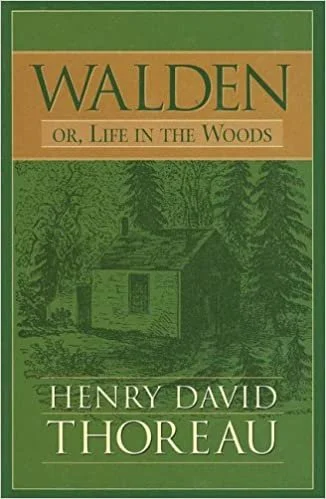
This reminds me of a favorite quote of mine: “How vast and profound is the influence of the subtile powers of Heaven and of Earth!” “We seek to perceive them, and we do not see them; we seek to hear them, and we do not hear them; identified with the substance of things, they cannot be separated from them.” It comes from the book Walden by Henry David Thoreau, about his simple living alone for two years, two months, and two days, and specifically my favorite chapter, “Solitude.” In the chapter, he speaks of the immense value that solitude alone in the woods has brought to him. The small things, from the animals and the trees and the beauty of the rain and the appreciation of every way nature works. To the importance of what that time is teaching, and the similarities we all have in such a state, to the few people he speaks with, to the very lake that sits outside.
After reading this quote some time ago, and now revisiting that chapter, my mind goes to many different places, but what it sticks on, what my mind cannot let go of, is the value. That thing that sits next to judgment like a sniveling whisper scheming to receive all things for itself.
Value is a beauty and a beautiful thing. It makes gorgeous the ugly world, but it separates and parts the many people it encounters. Basquiat and his tale account for that all too well. The worst nature of value is simply that of discourse, price, and commerce, not the exchange of experience and love, but that of the trade of look and see. I shrivel at it. The thought of such things is ever-present, yet held within the periphery like one of those diseases that, when it comes, makes its presence felt like the blazing heat upon the jagged rocks we cling to for survival. It is nothing I have control over, like all people, yet it is something that weighs heavily upon me. Is a man not able to decide what his speech is? Is a man not able to determine how he is heard, what is felt? Must a man be subject to the piercings and whims of those who swing gavels with irreverent direction and grand delusions? A fear that he must, that after speaking for so long, his speech is taken from him. All the joys Henry David Thoreau had in solitude, in the making, in the speaking of that book, they have turned it into a great American novel, and a great American novel holds value, holds weight that, from the bit that is said of Thoreau, he must care little for. In that, it is best left where it is, where it stands. Why give it the attention it craves when you have no say in it? When it means little? The blessing is that all you want will fall away. A sad blessing, yes, but all the same, as the thought of the rain pouring hard, drowning the seeds and the roots, but in turn, the grass grows greener. I was wrong to think it was the quiet before the storm because the storm itself is you. Desires, wants, needs, a debate in political theatre rather than a lovely dialogue between you, the page, the basement, and God. The issue is your solution. That is what solitude has taught me. The perception that isolation alone can bring. Insanity and actualization are the same path, just split by a small line marking the different sides.
There was a Black man named John Henry long ago who was a steel driver. He was, without a doubt, the best at his job. As time does, however, all things must become obsolete. They must fall to the wayside for the usurper that is called invention, and the steam-powered rock drill came along and did that. John Henry refused and wanted a competition with the mechanical calamity. So they did: man versus machine in a race to hammer steel. Who is the best? Who would win? John Henry. John Henry won. He was the better that day and proved the care and craft that were in steel driving. Every day is filled with nascent focus, the ever-present conversation between hammer and drill, no different than Thoreau in the woods or Basquiat in his cellar; he spoke out loud with violent screams.
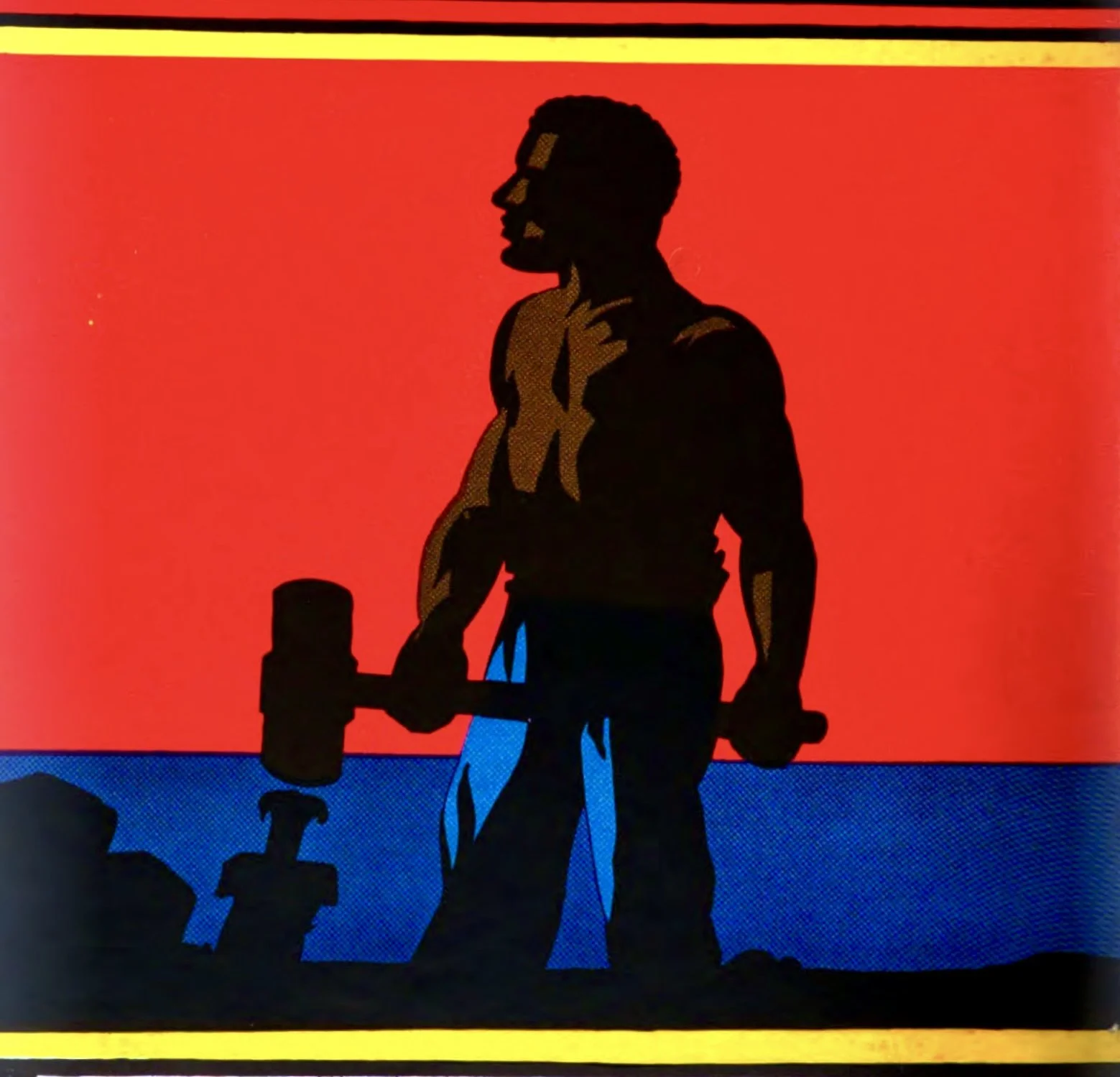
He died as soon as he won. He did claim victory, yes, but he died beating the machine. The machine kept working and made the man obsolete, and soon the next machine would do the same to it, although that challenge is not recorded in history. As much as this tells me the limits of our pursuits, of our conversations, it shows me the futility of it amidst the world that chokes us with the hands of nonviolent hatred. It is the most important story that comes to mind. You cannot do much. Your words, my words, may not carry the weight within such things as I wish them to or how I envision them. Within the margins, they may. That is where they are dynamic. That is where they bring all things together, where the conversation with my father allows me to speak of all things I wish and grow from the love I have cultivated and behold my words and voice finding the world that surrounds me in a cellar or in a lake. The same margins, however, are brought into the center, and then the machine that stands like Babel forces the cruel procedure of assimilation onto it and makes the new homogeneous.
It is futile. It is a scam. As beautiful, as great, and all-encompassing as it is, it is a scam. It can never say you as you wish for it to. It takes as much away as it gives, like most things. Isn’t that human, though? The irrational will to know and still do? I am a slave to it, like most people, and willingly so until I leave this world like Henry David Thoreau or Basquiat, although I ask for much more time and more conversations. Gladly, it should be seen through, and gladly, it will be. Still, years ago, I heard of a man named Thomas Thistlewood, a slaver in Jamaica. Someone we only know of from their conversations, from such detailed diaries of his crimes, sexual assault, rape, and violence. Along with those diaries, his library was vast, surprisingly so that Alexandria itself would look with positivity. It was filled with Enlightenment ideals and writers and their conversations, from people like Milton, those who explored astronomy and wrote poems. To use humanity’s greatest treasures for the worst deeds. I don’t know. It is just something that comes to mind often while writing.