Great Mac & Cheese Does the Soul Good
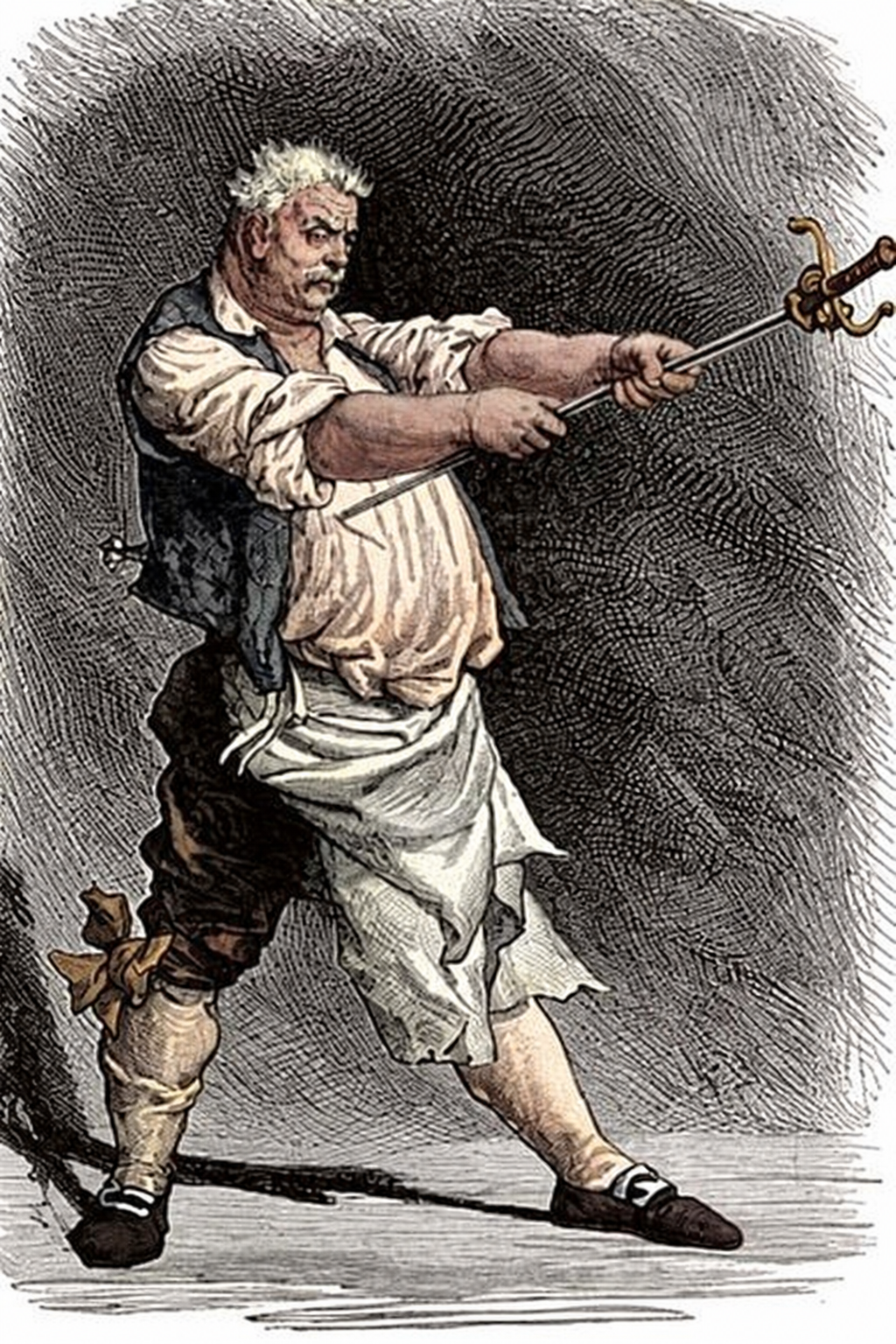
France’s François Vatel, King Louis XIV’s chef, who killed himself when the fish he ordered did not arrive on time
Sustenance is a requirement whose origins we often forget. It was hunting animals. We ate every part of the carcass because hunting was difficult. We moved to herding livestock, breeding animals for food while still eating most of them, and we built structures and organization, giving us choice in our food and our survival. Then we became even further siloed, and hunting became a sport and something for fun. Companies herded and cared for livestock rather than the family down the road. Animals are pushed down conveyor belts like factory toys, dismembered and dissected into parts judged by texture, taste, and worth, whether they are sold or not. The origin of food, the origin of survival, is a story that leads from necessity to affordability, from survival to pallet. Cooking was not considered an art, but a necessity. That is what progress is: it shapes things not to become lesser, but to give our processes and abilities new definitions than they had before. Same as the stories we told around fires to remember who and where we were, to keep one another safe; stories can be told now just to be told, needing no purpose, no construction at all. What is most interesting is that every new human, every generation, has to shape these facets of life in different ways. Yet they are still shaped as if demanded by some divine edict, artificial or otherwise.
My cooking has improved in recent years. Not too long ago, it was an afterthought. Food was always there for me, always present, always within grasp, and plenty of it, to the point where the word decision could exist in it- whether it was good or bad, whether it was worth eating or to be left alone. Now, out of that situation, it has evolved into a new necessity; a regress is too harsh; this is something different. Now cooking is done, and it happens so often that eating out is rare. I choose my food deliberately at the grocery store. Everything is eaten by a specific time; nothing goes to waste, as if the Neanderthal were breathing over my shoulder, panting in my ear with envy or excitement; his snarls do not betray his feelings. Unlike my far-distant relative, I can experiment and try new things. New recipes, new seasonings, new ideas of what it is to cook. Although my cookbook is paper-thin, I use it to the fullest. Each experiment is good to me, tasteful to me. It is mine; after all my hard work, my care, my understanding of what a meal is, not defined by anyone else. Above heaven and earth, it stands proudly: “I am become vanity,” it says half seriously, “amplifier of the world.”
What is best about cooking is that it is a deeply personal experience, and at its core, it's self-serving. That self-service is born of necessity, of course, and it grows into something selfless as you bring family and others in, but at its core, cooking is about you. A sole focus on the appreciation and delicacies that appeal to the individual that makes you. You decide what the ingredients are. You decide how much salt and pepper to use. What seasoning you like and dislike. How long to cook and when to turn. All the pieces and aspects of this brief journey are the silent motion through time and space, drawn by the hand of a shaking but beginning-to-steady cartographer. In the end, your mouth provides its soliloquy: its triumphant plea of refusal or denial of love and hate, disdain or pleasure in the flow of time that presents finality; the cartographer finishes, or must begin again. In that way, cooking is a pseudo-religious experience each time you take up the task. A task that whispers to me from the dark corner, beckoning my ear in its black trench coat, that it is losing its grip as another forcefully takes the pen. That force is the world; that force is the system that tells you loudly that your way, your acquisition, is wrong. It leads down many avenues, but it forces you to present yourself as learning. You must be taught. Kill the individual; save the citizen. Kill the cook, save the chef. From the outside looking in, that's what culinary school looks like. Trading T-shirts and shorts for crisply ironed aprons and large hats. Personal structure and rules traded for determined, specific functionality leading directly from A to B. Harsh words traded for loving remarks. Shaking heads traded for failing grades. Education is useful, and learning is an amazing way to grow your understanding of the culinary art or any art, for that matter. However, beauty has been traded for functionality and qualification. It is earned through education, not learned through passion. The love of salt and onion powder is traded for the use case of fitting combinations and predetermined if-then paths. As if the ethereal cry, the plea ringing loud against the nebula, is molded into the snort of a serendipitous donkey made to a rote hum lacking cadence, tilling the field and turning the wheel as told to. What was once love and feeling, given through generations and added upon a dash of something here, a sprinkle of something there, is now placed into a book to be followed and memorized, because this is how a proper chef makes crème brûlée. This is how a proper chef filets a halibut. This is what a properly instructed chef does. There must be a constant repentance lying by those castrated hands and the cackling stigmata bestowing incalculable material upon the eye. A lie believed of salvation and mastery that worth is to be earned. The repentance must sound like a lone man holding D2 on his Steinway, reminiscing about the song he once made on the Yamaha, the same song his teacher told him was designed poorly by an amateur.
In 1880, brothers Andre and Édouard Michelin needed a way to market Michelin Tires in France, where the automobile industry was still in its early stages. They decided that increasing car and tire sales would not come from quality or word of mouth, but from use. They created a guide with maps, gas station locations, and other road-trip information to encourage people to start driving. In 1920, it included restaurant and hotel recommendations, and restaurants were the most popular offering. In 1926, the brothers employed food critics, and the Michelin Guide gave its first stars to the best restaurants they found. Through sales and commerce, the Michelin brothers invented earned worth. The raging fire snuffed out turned into a hobbling thing incarcerated and fed oxygen by mahouts who decide when it is okay for a scream. Today, there are 3,783 Michelin Star restaurants in the world, and 157 of those have three Michelin Stars. A single star means “very good restaurant,” two stars “excellent cooking that is worth a detour,” and three stars, exceptional cuisine that is worth a special journey.” Some chefs spend their whole careers wanting a Michelin star, creating the perfect restaurant and making the single dish that gives them the credential. All to earn a star, all to earn worth, to earn a voice that is allowed to say, "I’m here.”
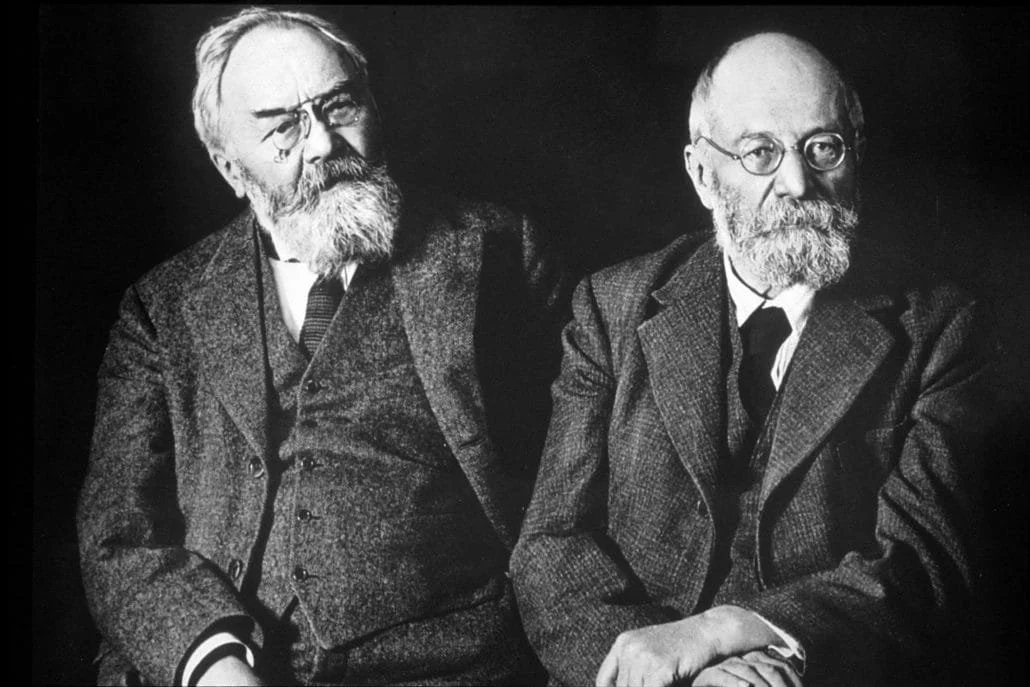
Andre and Édouard Michelin
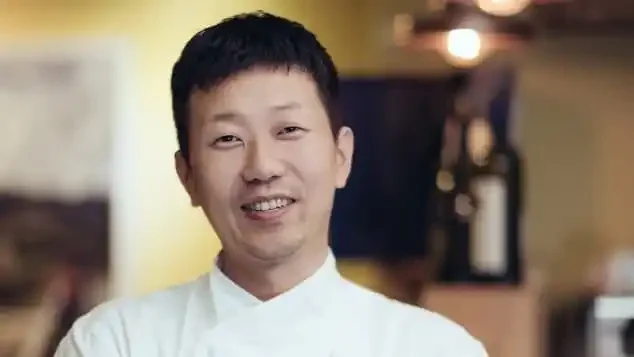
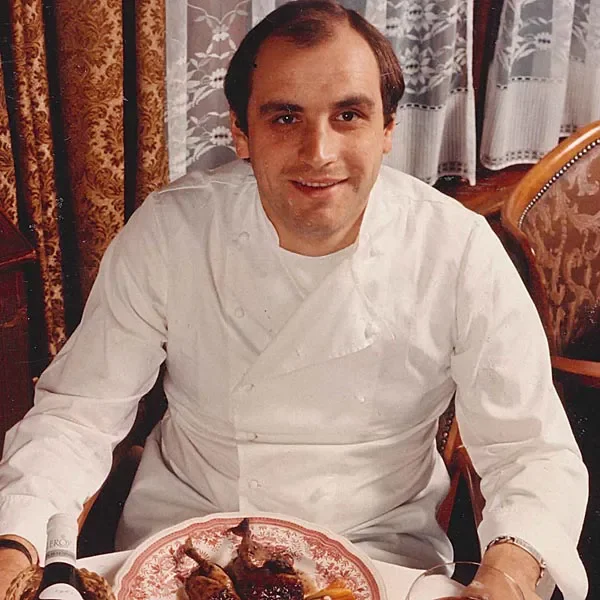
The Michelin Star is a particular beast, made purposefully. A specific distinction is that the star is given to the organization, the system, the restaurant. We may say Michelin-star chef, but that doesn't exist, because it was made as a guide of where to eat, not who is cooking. A chef leaves and becomes just another chef. If the restaurant closes down and reopens, it is a new restaurant; there is no grandfathering of stars. Let’s say you reach your goal and earn your star; that is the beginning, because this humanity is earned through what you do for me today. And that today lasts forever. Restaurants are evaluated constantly, with no leeway in standards, or they risk losing their star. In an already fast-paced, high-pressure environment, it is to ask the panopticon with glee to take your hand and place you inside of its womb, and every motion it decides whether you are to be harmed or left alone. You work for a test every year with no date; like the illumination of manufactured confidence hiding behind the sun, it looms like a cloud filled with loathsome revulsion. Many chefs go as far as to give back their stars or ask not to be evaluated. French chef Sébastien Bras asked to be excluded from the guide; South Korean chef Eo Yun-gwon spoke of the stress it induces; and Swedish chef Magnus Nilsson closed down his restaurant. Gordon Ramsay himself compared his restaurant losing its two-star rating to the loss of girlfriend love unconditionally, “I started crying when I lost my stars…It’s a very emotional thing for any chef.” The worst outcome came in 2003, when French chef Bernard Loiseau committed suicide months after learning his three-star restaurant could lose its third star. Even the possibility of perceived demotion is enough to make a man kill himself, enough to turn prideful bliss into arranged manic schizophrenia. A schizophrenia that produces the image of the same day, the same dish again and again and again. Once you receive the Michelin Star, you received it for a reason; you earned your worth for a reason because of the one thing you did. You're expected to keep serving the same food and create the same dining experience that earned that star. It's double-edged: as a chef and the provider of the restaurant's experience, you want to give customers the meals and experiences that earned you that star. The other edge is that you are a perennial contender in the area for that star; reevaluation happens all the time, every year, so making changes and trying new things might cost you that star when a reviewer tries the new experience. Like some hex, the star has become a scarlet letter; your goals have kept the bars of your prison in place. Stifled your creativity, hindered your passion, and suffocated innovation all for a perceived notion of greatness. A greatness only in name, lacking any financial weight, as maintaining this status costs more than it gives most of the time. High-quality ingredients, extreme labor costs at that scale, and constant payments for service and decorations. Where are you supposed to find any profit within the heap? This can go further, but you see it now: you see the place you are found in the home that “earned” gives you. An achievement leads directly into a treadmill that asks you to run and run, hit goal after goal, with the promise of rewards and soon-to-be awards that mean nothing, because what you want is to be that boy or girl who ran for fun, who ran to get away. The boy or girl who cooked because you thought something might taste good.

Pierre Damas Bel was a 20-year-old Haitian immigrant in Springfield, Ohio. Monday, August 31, 2026, Pierre walked into traffic and died. It is believed he did this due to the stress and fear of deportation. He came to the United States in 2024 to be with his parents and is one of the 350,000 Haitians who lost Temporary Protected Status (TPS) after the Supreme Court allowed the administration to end the protections. DHS placed him in an ankle monitoring program after he lost his TPS status while his immigration case continued. Pierre wrote on social media, “I came to this country to pursue my education. I didn’t come here to commit a crime or hurt anyone. Yet now I’m walking through the streets of the United States with a GPS monitor on my leg, carrying a feeling of shame and humiliation I never imagined I would experience.” A high school soccer player, part of JROTC, and in his first year at Wright State University, planning to study Neuroscience. All things we would consider right, I imagine. He did everything by the book, and he went above and beyond. Still, it was not enough; it is not enough. A country America asks its citizens not to travel to due to crime and lack of healthcare, but after taking away the protection status of 350,000 Haitians, they send them to that country. Haiti Pandemonium now turned Paradiso? Treating them no differently than criminals. Humanity is earned. Humanity is granted, and in this country, in this world, you are not born with it.

Pierre Damas Bel
I can’t help but think of the futility of it all. Your worth is directly tied to your ability to produce within this country and your race. Your humanity is earned through what you can give, and being black those are cut down even further. No one is a better example than me. As black children, the world, the United States, and all systems directly tell you what makes you worthwhile. Sing! Run! Jump! Make me laugh! That is how you earn your humanity; that is what gives you enough credence to sit amongst the rest at the table to be treated not as equal, but to give you the ability to stand up. That is not to say any other profession or choice you choose to make in life is closed to you as a black woman or man, but in those worlds, in those industries, you will always be black. You see, the unique thing about entertainment, sports, and singing is that it doesn’t strip you of your blackness, but it presents you as other. Others made early to fight for that star every day. As a talented athlete growing up, it smacks you in the face on the field: there's no one to shut you out, and no one can hide you. Play after play, down after down, you are above everyone else fairly, meritocratically; you can have your do. When play after play isn’t made, your stars are threatened. In that comes the game. You see, since I am bigger, I run faster and hit harder; instead of the public school, you receive funding for the private school. Instead of facing the realities of being a Black high schooler trying to get admitted to college, I don’t worry about that because, as smart as I am, as much as I love writing, storytelling, and I know my name; The system only sees someone who runs faster, was born bigger, and hits harder. So I don’t worry about applications; I get my score, I get my offers, and I go to my school. While every other black student faced what it meant to be Black at a PWI, I was a black student athlete and I ran faster, was born bigger, and hit harder. They use my abilities to publicly flog other black athletes at HBCUs in the service of stat games, a reprieve from real competition. They earn punishment for not being chosen by my institution for not running faster or hitting as hard as me. A chastisement they have to endure to fund their under-resourced school; the PWI reiterates every year at the table, “the strong do what they can; the weak suffer what they must.” I moved on, paid for my ability through college and into the professional league until my use case was up. When they finally changed their opinion and stripped me of my stars. Your production is mute now, son; go home. You ask them what I am supposed to do? As if the words never left your lips, they walk away.
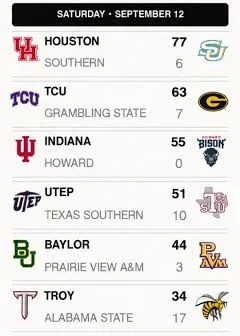
Week two of the 2026 college football season. I couldn’t help myself to show the rest of the scores; this gets the point across.
I am blessed with the parents, siblings, and community I have, because I always saw it; I always knew what it is, what it was, and how they see me. The beautiful group of individuals I call family also keeps the perception of who I am in front of me. So I am fine; I will be fine and will continue to excel because of them and because of what they saw and what they knew. Not everyone is lucky; not everyone who runs faster, hits harder, and is born bigger has that. Earning humanity through production is purposeful; it is a conveyor belt made for one thing: to make you run faster and hit harder. Being in class and learning? No, you do not need that; move along. Socializing, growth, and development of the necessities to go through life as a black man? No, move along; you do not need that. You need to battle for how many stars you’re supposed to have. What ranking you’re going to be. Everything else, no need to worry about that because if you keep going, you won’t have to worry about that. You have your stars, remember. Athletes, after they are done, talk about their identity as a football player being gone. It was who I was. What am I to do? That is how people saw me. What am I to do? I never felt that, thanks to the family I know: I have always known what I was going to do, what I was meant to do. What angers and infuriates me, what makes my skin seethe to the tune the wind plays using string currents, as my blood boils with the flame of the white dwarf born anew. What makes me angry is that it is identity, yes, but that is their fault, brother, not yours; it is that now you lose the TPS of “other,” and you are fully Black again. Back to where all the cards are on the table, and now you're on square one, where those other individuals who jump higher and run faster didn't have people around them to help them understand what was waiting on the other side of that cliff. They are at square one, and left with nothing. You cannot produce, and you are black, and you must find your own way. No salvation awaits you on this sphere or within this ring. Whether you wear a gold jacket or become a mogul, it affects you; whether you want to see it or not is your choice, and it depends on whether anyone has shown you. Pierre was not dealt a bad hand; the timing was not wrong. It is how things work; it was by design. A design that affected his home country, making them prohibited because they chose to revolt and fight for their freedom, and they pay for it every day. A design in everything, found everywhere, because you must earn your right to live every day. Somehow, when you see it, when you find it, for some, the story is the same in most respects. They needed something, so they created something, and that something takes on a life of its own. One day, it just so happened that two brothers wanted to sell more cars and tires, and made restaurants and chefs earn their credibility in perpetuity. Taking the hand of a sleeping man to sign a contract he never saw and will never see; of course, simplicity is what gets you.
Ma, I thought of you today during all of this. Ma, I appreciate you for seeing the world firsthand for what it was and what it will do. Ma, you raised me to know what moves its stomach inching on the ground and what infects the sky dropping its shadow. To you, Ma, I say thank you. I say thank you for the love you have shown my siblings and me. For the love and care your mother showed you before, and the love her mother showed her. Ma, I say thank you for a love that found me in sorrow and my confusion, a boy with questions as answers, ran away. I thank you for conditioning me, for training me mentally and physically, for the breath of life you placed inside and the inspiration that scalds me with its phosphorescent blaze. I thank you for the veracity to look on and look far, look deep, and look narrow into the canyon overflowing with the thousand voices incanting night. Ma, I thank you for the grace you gave a foolish boy, whom you helped turn into a man. Ma, I thank you because without you, who am I? Without you, where am I?
Ma, I thank you most especially for the Mac and Cheese you gave me. A Mac and Cheese starting with your grandmother measuring ingredients by hand, mixing cheeses, and cooking what you and the family thought tasted good. Your grandmother's Mac and Cheese was the base, and your mom innovated on it by adding REDACTED, making the dish sing a little and the taste hum louder. Then my Aunt put her own twist on it and added REDACTED, turning that voice into a shout that hummed into a symphony. And, Ma, what you did to it when you changed REDACTED, the bellow that came from the sonorous vociferation felt like a benediction from the Father. Ma, most of all, thank you for teaching me it all. I still remember that call. Your instruction, our laughs, the history of the Mac and Cheese in our family, what you changed, what you kept, how much ingredients cost then and now, what you took, what you added. Ma, I love you, and I thank you because I remember all of it, and as I make Mac and Cheese and carry the dish forward, I worry because I don’t know what to add yet or what to change. I’m not sure if you felt the same, but something tells me I’ll figure it out; it will come to me. Like it did for all others before you, and it will come for me. It wasn’t something earned or given; no school or education needed just another step in life, given to another with the silent ask of what dash what hint of REDACTED am I gonna add, how am I gonna change it.